
The SetUp
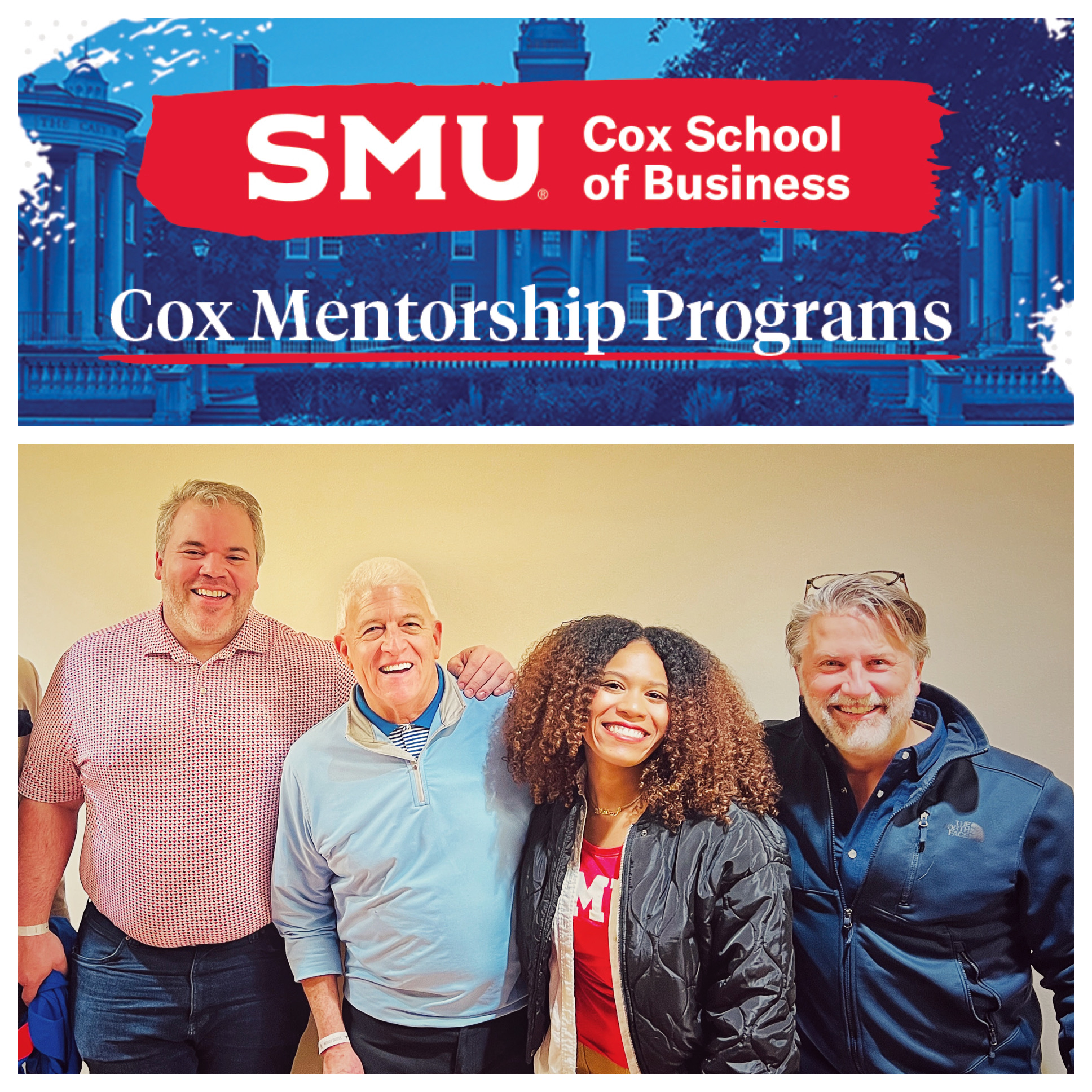
One morning this week, I sat at a mentorship breakfast at SMU’s Cox School of Business with the new dean, Todd Milbourn.
Dean Milbourn shared a story about one of his own mentors — someone who guided him through his dissertation, later became a peer, and eventually reported to him. What began as a structured relationship deepened when they discovered shared roots: both from Chicago, both lifelong sports fans (Da Bears! Go Bulls! Go Cubs!).
That spark of common ground created a connection that lasted decades. A reminder that mentorship isn’t just about formal pairings. It’s about building real relationships that evolve over time.
Why Mentorship Matters
I’ve been part of SMU’s MBA mentorship program for a long time, and mornings like this remind me of these things:
- Mentorship is pay-it-forward. Every one of us has benefited from people who gave us a hand up.
- It accelerates growth. It bridges the gap between classroom theory and real-world decisions.
- It strengthens community. Generations stay connected through stories, advice and shared experience.
- It re-centers humanity. In a world of screens, mentorship creates space for real conversation.
What I’ve discovered over the years is that mentorship is less about having the answers and more about showing up with curiosity, consistency, and openness.
Soyong’s Perspective
I brought my colleague and friend, Soyong Jensen, with me. Afterward, she shared how some of the most meaningful mentors in her life weren’t assigned at all.
“Sometimes it’s simply admiring someone from afar, observing how they lead and learning through that inspiration.
For me, connection and relationship matter most. Shared backgrounds, similar experiences, or even common struggles create resonance. That’s when stories land — because people don’t just learn from advice, they learn through lived experiences.
Mentorship also has to be genuine. Authenticity is everything. People sense when it’s contrived, and that undermines trust.
Some of my mentors have become lifelong friends. They now give me advice not just about work, but about life. That’s when you know you’ve found the best kind of mentor — someone whose wisdom evolves with you, whose presence endures long after the formal mentorship ends.”
Her perspective brought the conversation full circle: mentorship isn’t just guidance, it’s shared humanity.
Framework for Mentors
Mentorship isn’t about being the expert in the room. It’s about creating space for growth.
- Be present. Consistency builds trust.
- Ask before you tell. Curiosity before advice.
- Share stories. Lived experience beats lectures.
- Open doors. Introduce networks and opportunities.
- Adapt. Relationships shift—today’s mentee could be tomorrow’s collaborator.
Framework for Mentees
Great mentorship doesn’t happen passively.
- Own your story. Be able to tell it clearly and in different ways.
- Stay curious. Ask thoughtful questions.
- Follow through. Action builds credibility.
- Bring value. Energy, perspective, and insights matter.
- Invest time. Trust grows in the spaces between meetings.
Formal vs. Informal
- Formal mentorships (like MBA programs) provide the structure and accountability to get started.
- Informal mentorships (coffee chats, admired leaders, colleagues) often become the deeper, lifelong bonds.
The real magic is when one grows into the other.
The Human Side
Mentorship requires practice from both sides. For young professionals – especially those raised behind devices – it may be the first place they get real reps in:
👉 Being interested (asking questions).
👉 Being interesting (telling stories).
👉 Being vulnerable enough to connect.
Final Thought
Mentorship is less about hierarchy and more about humanity.
It takes:
- Timing (right people, right moments).
- Effort (consistency over convenience).
- Openness (to listen and share).
- Vulnerability (to connect).
Do it right, and you don’t just help build a career — you build relationships that last a lifetime.