The overlooked role of digital credibility in career transitions.
When companies announce a reduction in force, the conversation usually centers on numbers. How many positions are being eliminated? How much severance will employees receive? How long will healthcare benefits continue? What kind of outplacement assistance will be offered? These are important questions. Losing a job can be financially and emotionally devastating, and companies should do what they can to ease that transition.
I know that from experience. In 2003, after the dot-com bust, I was on the receiving end of a layoff. The severance helped. It did not tell anyone outside that building who I was or what I could do. That part was up to me.
As I continue researching my next book, I keep coming back to a question that gets far less attention than the severance math. What happens to someone’s professional reputation the day after they lose their job? And who is helping them prepare for what comes next?
The Outplacement Trade-Off
Traditional outplacement services have been around for decades. Depending on the program, they help displaced employees update their resumes, prepare for interviews, build job-search strategies, and work through the emotional weight of unemployment. There’s real value in that. But it’s expensive, and companies facing hard financial decisions are understandably looking for ways to cut costs. Some employers are scaling back outplacement or eliminating it altogether, directing that money toward larger severance packages instead.
I understand the logic. Given the choice between a few thousand more dollars and a career-transition program, plenty of employees would take the money. The problem is what that money can’t buy.
Many of those employees haven’t looked for a job in years. They’ve been busy doing their jobs: building relationships inside the organization, delivering results, earning promotions. Their resumes are out of date. Their LinkedIn profiles are digital business cards at best. Their professional networks live mostly inside the company they just left. Suddenly they’re competing in a job market that has changed dramatically since the last time they interviewed, with tools that may no longer be enough.
Your Resume Has a Visibility Problem
The resume still matters, and I’m not suggesting anyone abandon it. But it has a fundamental limitation. Only the people you send it to, or who can access a system where you’ve uploaded it, will ever see it. Even then, there’s no guarantee a human being reads it. Applicant Tracking Systems help employers manage enormous volumes of applications, and depending on how they’re configured, qualified candidates can be filtered out or buried before a human being gives them real consideration.
When a resume does reach a recruiter, the window is remarkably brief. A widely cited eye-tracking study by Ladders found that recruiters spent an average of 7.4 seconds on their initial review of a resume.
Seven point four seconds.
If you’ve watched Ted Lasso, you may remember his advice to be a goldfish, because a goldfish has a ten-second memory. By Ted’s math, a goldfish gives you more time than a recruiter gives your resume.
A resume tells someone what you’ve done. Your digital reputation shows them why it matters and what you’re capable of.
And unlike your resume, your reputation doesn’t have to wait for you to apply for anything.
The Phone Call I Wasn’t Expecting
Years ago, I got a call from a headhunter. I wasn’t looking for a job. I was happily employed and certainly wasn’t expecting the conversation that followed. His opening line got my attention.
“Michael Dell likes what you’re doing.”
What followed was an unplanned, 90-minute conversation that led to a six-figure engagement on an unadvertised project for the founder of Dell. No job posting. No application. No resume submitted into a system. No competing against hundreds of applicants for an opportunity I didn’t know existed.
So how did it happen? I’d been active on LinkedIn, sharing ideas, joining conversations, and demonstrating what I knew. I wasn’t broadcasting my accomplishments. I was adding value and building relationships. Back then, the promise of social media was simple: share good stuff. I took that seriously, and I still believe something that gets lost in today’s obsession with content creation. Social media without engagement isn’t social. It’s just media.
My presence was doing something my resume never could. It was helping people who had never met me understand my experience, my expertise, and my credibility. It didn’t guarantee anything. But, it opened a door I didn’t know was there.
Your Reputation Doesn’t Have to Wait for You to Start Looking
Think about a professional who has spent eight years at the same organization. They’ve delivered outstanding results, mentored colleagues, solved hard problems, and earned the respect of their peers. Inside the company, everyone knows what that person brings to the table.
Outside the company? Maybe nobody knows. Their expertise is real, but it’s invisible, and their reputation lives inside a network that just got a lot smaller.
Now imagine that same person had spent those eight years building a credible, discoverable presence. Not posting every day or chasing influencer status. Just sharing useful perspectives, contributing to industry conversations, and leaving evidence of their expertise where people could find it. When a recruiter, a hiring manager, a former colleague, or a potential partner searches their name, there’s something meaningful to find. Their credibility didn’t shut down when the company laptop did.
There’s a difference between being qualified and being known as someone who is qualified and vetted. There’s a difference between having experience and having visible evidence of it. Most careers stall somewhere in those gaps.
Closing them is what I mean by Digital Validation®: making your real professional value visible, understandable, and credible to people who don’t know you yet. Followers and impressions are beside the point. And the best time to build that reputation is long before you need it.
Offboarding Is Still Part of the Employee Experience
There’s another side to this, and it’s one CHROs should be thinking about.
When an organization lays people off, the relationship doesn’t end on their last day. Those employees become alumni, and they remain part of the company’s extended reputation whether or not there’s a formal alumni program. Some large companies and professional services firms invest seriously in those networks. Most organizations have nothing comparable.
Here’s the part that gets missed. A company spends years helping its people become productive and effective, then sends them out the door with no way to show the world what they became. The evidence of their expertise stays behind in performance reviews, internal systems, and a network that no longer includes them. That isn’t only the employee’s problem. When an organization’s talent can’t be verified outside its walls, that’s an organizational risk, and it’s one of the patterns I’ve been tracking under Executive Invisibility Risk™.
Nobody expects a company to guarantee everyone a new job. But the way an organization handles a difficult transition shapes trust, goodwill, and the odds of future referrals, rehires, and customer relationships. People remember who helped them land.
Offboarding ends the employment relationship. It shouldn’t end the reputation relationship.
That doesn’t require an expensive, months-long outplacement program. It can be practical training that helps people understand their digital footprint, strengthen their professional credibility, and build the visibility they’ll need for the next chapter. It scales, it costs a fraction of traditional outplacement, and it belongs in every RIF plan alongside severance and benefits continuation.
Outplacement still has its place. Resume help, interview prep, coaching, and emotional support all matter. But those services help people compete for opportunities that already exist. Digital credibility helps them get discovered for the ones they don’t know about yet.
Don’t Wait Until You Need to Be Found
If you’re employed right now and not looking, this is exactly why it matters. I’ve spent years teaching professionals and organizations how to build credibility and create opportunity through their digital presence. More than 10,000 people have gone through my training programs, and the lesson I keep coming back to is simple.
You can’t control when opportunity will appear. You can influence whether you’re visible when it does.
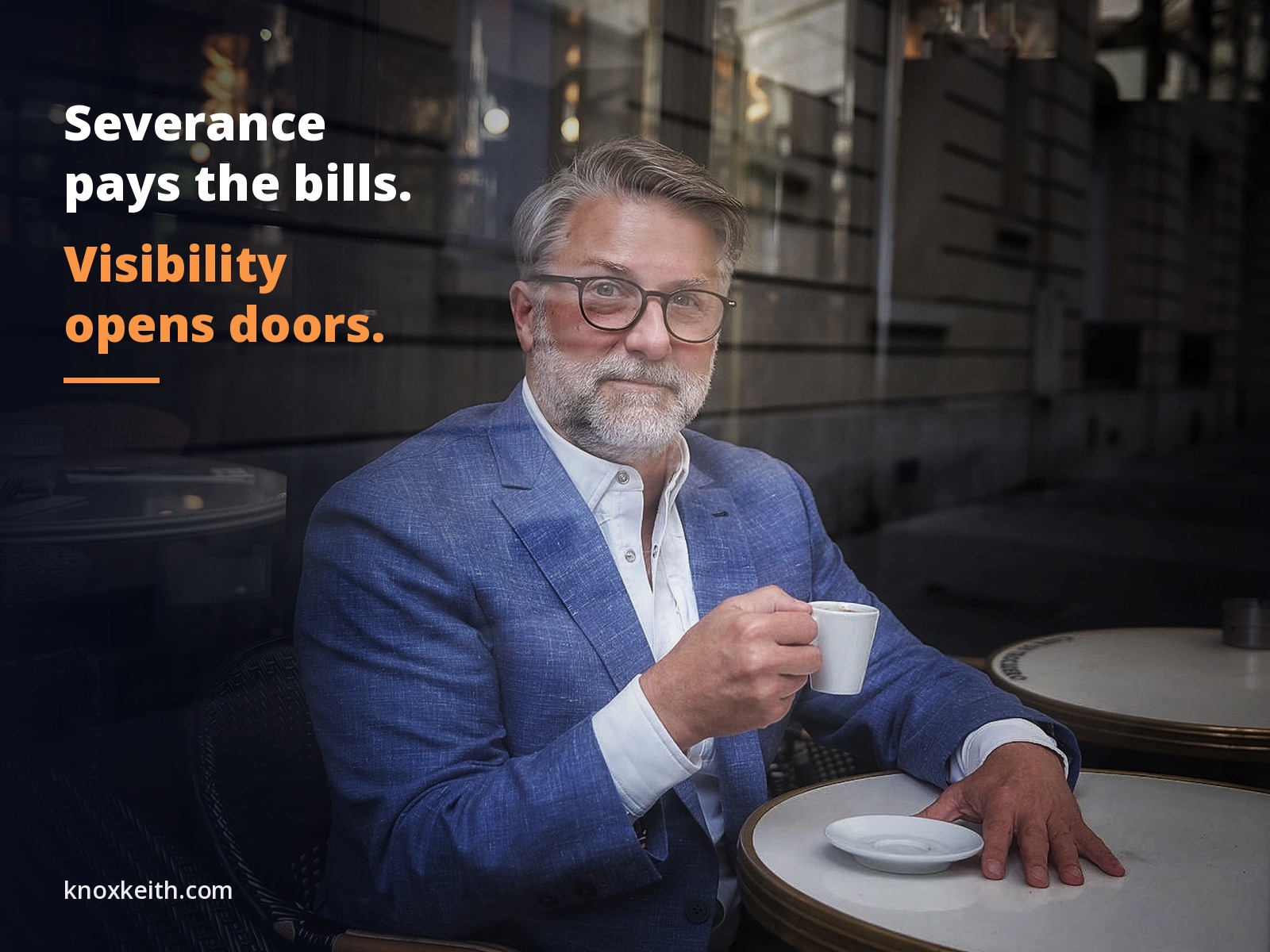
Severance gets someone through the next few months. A credible professional reputation creates opportunities for years.
Sometimes the most valuable opportunity is the one you never knew existed.
If you’re a CHRO or HR leader, I’d like to hear how your organization handles this. I’m interviewing HR leaders for my next book on executive visibility, and your perspective on offboarding, alumni, and reputation would be valuable. Send me a message on LinkedIn and let’s talk.
If you want to build your own Digital Validation® before you need it, get details on the next Digital Validation® course.

______________________________________________________________________________
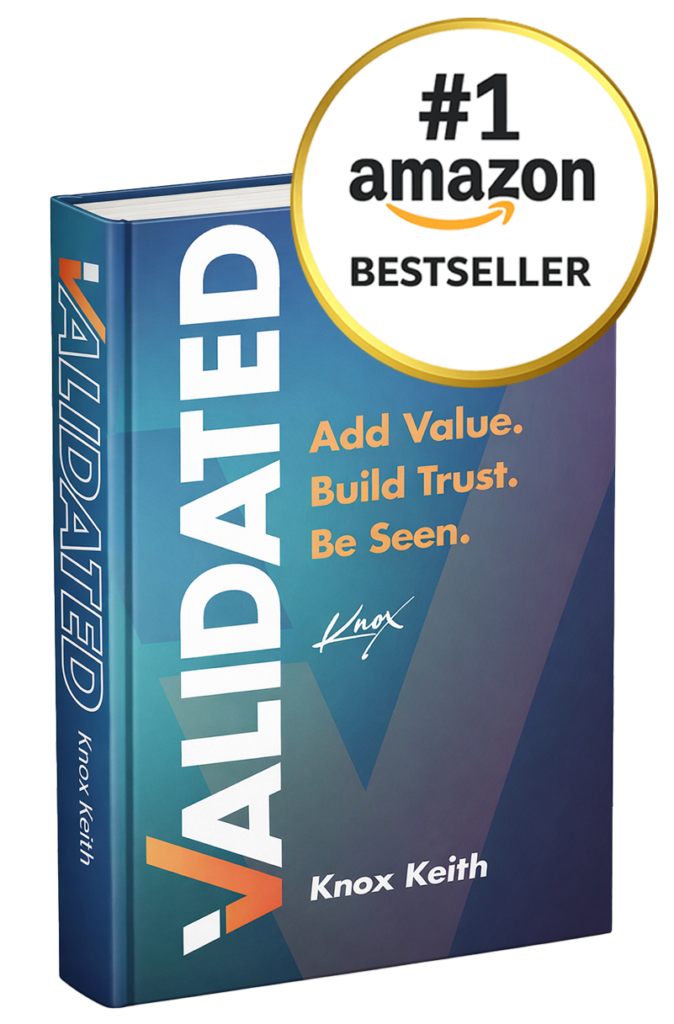
Knox Keith is the creator of Digital Validation® and the author of Validated: Add Value. Build Trust. Be Seen. He is an Emmy Award-winning storyteller, executive advisor, and adjunct professor at SMU’s Cox School of Business, working with organizations including Dell, AT&T, Nike, Chevron, and BP.
______________________________________________________________________________
And as always —

➡️ Get Validated: Add Value. Build Trust. Be Seen. https://www.amazon.com/dp/B0GQ57HLXM
➡️ Join the Digital Validation™ program — https://knoxkeith.com/courses/
➡️ Give me a follow on LinkedIn: www.linkedin.com/in/knoxkeith
➡️ Subscribe to my newsletter: https://validatedbyknox.mykajabi.com/newsletter
Frequently Asked Questions
What is the difference between severance and outplacement?
Severance is financial support that helps a departing employee get through the months after a layoff. Outplacement is a career-transition service that typically includes resume help, interview preparation, job-search coaching, and emotional support. Severance covers the bills. Outplacement helps people compete for open roles. Neither one, on its own, makes a person discoverable for opportunities that haven’t been posted.
Why are some companies replacing outplacement with higher severance?
Outplacement programs can be expensive. When budgets are tight, some employers redirect that money into larger severance packages, and many employees would rather have the cash. The trade-off is that severance does nothing to help people show the outside world what they can do.
Is a resume enough to find a job after a layoff?
Rarely. A resume is only seen by people you send it to, and applicant tracking systems may filter it before a human reads it. A widely cited Ladders eye-tracking study found that recruiters spend an average of 7.4 seconds on an initial resume review. A credible online presence lets people find and evaluate you before you ever apply.
What is Digital Validation®?
Digital Validation® is the disciplined building of a strong, consistent, and professional online presence that earns trust and creates real opportunity. Created by Knox Keith, it focuses on making a professional’s real value visible, understandable, and credible to people who don’t know them yet. Followers and impressions aren’t the goal.
How can HR leaders support employee visibility during a reduction in force?
HR leaders can add practical digital-credibility training to the career-transition benefits in a RIF plan, alongside severance, benefits continuation, and outplacement. Training like this helps departing employees understand their digital footprint, strengthen their professional profiles, and become discoverable for their next opportunity. It costs far less than traditional outplacement and works at any scale.
How does offboarding affect employer reputation?
Former employees become alumni, and they remain part of a company’s extended reputation. How an organization supports people through a layoff shapes trust, goodwill, and the likelihood of future referrals, rehires, and customer relationships. When a company’s talent can’t be verified outside its walls, that becomes an organizational risk, not just a personal one.
When should professionals start building their digital reputation?
Long before they need it. Credibility built over years of sharing useful ideas and engaging with others is far more persuasive than a profile updated the week after a layoff. You can’t control when opportunity appears, but you can influence whether you’re visible when it does.