

Signal vs. Noise: Why Executive Visibility Isn’t the Same as Executive Credibility
There’s a difference between being visible… and being truly seen. And most executives don’t realize that.
They assume visibility is the goal:
- More LinkedIn posts
- More conference panels
- More podcast appearances
- More polished headshots
- More AI-generated thought leadership
But visibility alone doesn’t create trust. In fact, visibility without credibility often creates skepticism.
Because the market has become incredibly good at detecting noise. And right now, there’s a growing gap between executives who are simply present online… and leaders who are actually being seen.
That gap matters. For the executive. For the employer brand. For recruiting. For trust. For retention. For credibility in the marketplace.
We’re Living in a Signal-Starved Environment
Every platform is louder than ever. Everyone is posting more. Companies are producing more content. AI has accelerated content volume at scale. And yet trust continues to erode.
Why?
Because people are no longer evaluating leadership based on polished messaging alone. Instead they’re evaluating:
- consistency
- authenticity
- relevance
- expertise
- engagement
- proof
- behavior over time
In other words: They’re looking for signal. Not noise.
Signal is earned. Noise is manufactured. And most organizations are accidentally training their leaders to create noise.
The Executive Visibility Trap
Many leaders were taught that executive visibility is primarily a communications function. So they:
- outsource their voice
- publish overly sanitized content
- avoid specificity
- speak in generic corporate language
- confuse professionalism with emotional flatness
- treat LinkedIn like a press release distribution channel
The result? Highly visible executives who feel completely invisible. Because audiences can sense when content lacks:
- conviction
- lived experience
- pattern recognition
- humanity
- vulnerability
- specificity
People don’t connect with “thought leadership.” Instead, they connect with signals of competence, clarity, and trustworthiness. That’s what makes someone believable.
Why Leaders Get This Wrong
Part of this is generational. Many executives built successful careers before digital visibility and Digital Validation™ became part of leadership evaluation. Their credibility was built:
- internally
- inside conference rooms
- through relationships
- through operational success
- through tenure
- through titles
But today’s marketplace evaluates leadership differently. Modern credibility is no longer confined to internal reputation. It’s externally validated.
Which means leaders are now being assessed by:
- employees
- recruits
- customers
- partners
- investors
- AI systems
- search engines
- social platforms
- future employers
And all of those audiences are asking the same question: “Can I see evidence of how this person thinks?”
Not just what they’ve accomplished. But, how they think.
That’s the shift.
The Risk Companies Are Ignoring
This isn’t just an executive branding problem. It’s an enterprise risk issue. Because when leadership lacks credible signal:
- trust weakens
- recruiting gets harder
- employer brand suffers
- culture messaging feels hollow
- change initiatives lose momentum
- layoffs become more damaging
- employees disengage
- competitors become more believable
And during uncertainty, the absence of credible leadership signal becomes painfully obvious. It can be silence or zero digital presence. It can be generic messaging. It can be overly polished leadership content.
The market sees it all and interprets as noise, not credibility.
_________________________________________________________________________________________________________________________________________________
“The gap between executive visibility and executive credibility shows up directly in pipeline conversion rates, brand trust scores, and the effectiveness of demand generation investment.”
_________________________________________________________________________________________________________________________________________________
Visibility Without Credibility Creates More Noise
This is where many organizations make the biggest mistake. They assume the solution is:
- “more content”
- “more executive posting”
- “more visibility training”
But visibility alone is not the goal. Credible visibility is. Because without credibility:
- content becomes performative
- posting becomes transactional
- audiences disengage
- leaders sound interchangeable
- trust decays slowly over time
And eventually, the executive becomes part of the noise they were trying to rise above.
So What Creates Signal?
Signal is built through repeated proof over time. Not personal branding theater. Not motivational quotes. Not corporate jargon.
Real signal comes from:
- demonstrated expertise
- clear points of view
- consistency
- thoughtful engagement
- storytelling
- specificity
- generosity
- visible pattern recognition
- helping people think differently
- showing—not claiming—credibility
In other words: Signal is what happens when people trust the substance behind the visibility.
High-Level Steps to Fix It
Organizations don’t need louder executives. They need more believable ones. That starts with a mindset shift.
1. Stop treating visibility like PR
Executive visibility is no longer just communications. It’s leadership infrastructure.
2. Replace polish with clarity
Over-produced content often weakens trust. Specificity strengthens it.
3. Teach leaders how to communicate expertise
Most executives have deep experience but no framework for translating it publicly. That’s a capability gap.
4. Encourage participation, not broadcasting
Signal is reinforced through interaction:
- commenting
- conversations
- thoughtful responses
- visible engagement
Not just publishing.
5. Focus on proof, not performance
The goal isn’t to “look like a thought leader.” The goal is to become a trusted signal in the marketplace. There’s a difference.
Final Thought
The future won’t belong to the loudest leaders. It will belong to the clearest and most credible ones. Because in a marketplace overwhelmed by content, AI, automation, and endless visibility… Being seen is no longer automatic. Being seen is earned.
Signal vs. Noise: Why Executive Visibility Isn’t the Same as Executive Credibility
There’s a difference between being visible… and being truly seen. And most executives don’t realize that.
They assume visibility is the goal:
- More LinkedIn posts
- More conference panels
- More podcast appearances
- More polished headshots
- More AI-generated thought leadership
But visibility alone doesn’t create trust. In fact, visibility without credibility often creates skepticism.
Because the market has become incredibly good at detecting noise. And right now, there’s a growing gap between executives who are simply present online… and leaders who are actually being seen.
That gap matters. For the executive. For the employer brand. For recruiting. For trust. For retention. For credibility in the marketplace.
We’re Living in a Signal-Starved Environment
Every platform is louder than ever. Everyone is posting more. Companies are producing more content. AI has accelerated content volume at scale. And yet trust continues to erode.
Why?
Because people are no longer evaluating leadership based on polished messaging alone. Instead they’re evaluating:
- consistency
- authenticity
- relevance
- expertise
- engagement
- proof
- behavior over time
In other words: They’re looking for signal. Not noise.
Signal is earned. Noise is manufactured. And most organizations are accidentally training their leaders to create noise.
The Executive Visibility Trap
Many leaders were taught that executive visibility is primarily a communications function. So they:
- outsource their voice
- publish overly sanitized content
- avoid specificity
- speak in generic corporate language
- confuse professionalism with emotional flatness
- treat LinkedIn like a press release distribution channel
The result? Highly visible executives who feel completely invisible. Because audiences can sense when content lacks:
- conviction
- lived experience
- pattern recognition
- humanity
- vulnerability
- specificity
People don’t connect with “thought leadership.” Instead, they connect with signals of competence, clarity, and trustworthiness. That’s what makes someone believable.
Why Leaders Get This Wrong
Part of this is generational. Many executives built successful careers before digital visibility and Digital Validation™ became part of leadership evaluation. Their credibility was built:
- internally
- inside conference rooms
- through relationships
- through operational success
- through tenure
- through titles
But today’s marketplace evaluates leadership differently. Modern credibility is no longer confined to internal reputation. It’s externally validated.
Which means leaders are now being assessed by:
- employees
- recruits
- customers
- partners
- investors
- AI systems
- search engines
- social platforms
- future employers
And all of those audiences are asking the same question: “Can I see evidence of how this person thinks?”
Not just what they’ve accomplished. But, how they think.
That’s the shift.
The Risk Companies Are Ignoring
This isn’t just an executive branding problem. It’s an enterprise risk issue. Because when leadership lacks credible signal:
- trust weakens
- recruiting gets harder
- employer brand suffers
- culture messaging feels hollow
- change initiatives lose momentum
- layoffs become more damaging
- employees disengage
- competitors become more believable
And during uncertainty, the absence of credible leadership signal becomes painfully obvious. It can be silence or zero digital presence. It can be generic messaging. It can be overly polished leadership content.
The market sees it all and interprets as noise, not credibility.
Visibility Without Credibility Creates More Noise
This is where many organizations make the biggest mistake. They assume the solution is:
- “more content”
- “more executive posting”
- “more visibility training”
But visibility alone is not the goal. Credible visibility is. Because without credibility:
- content becomes performative
- posting becomes transactional
- audiences disengage
- leaders sound interchangeable
- trust decays slowly over time
And eventually, the executive becomes part of the noise they were trying to rise above.
So What Creates Signal?
Signal is built through repeated proof over time. Not personal branding theater. Not motivational quotes. Not corporate jargon.
Real signal comes from:
- demonstrated expertise
- clear points of view
- consistency
- thoughtful engagement
- storytelling
- specificity
- generosity
- visible pattern recognition
- helping people think differently
- showing—not claiming—credibility
In other words: Signal is what happens when people trust the substance behind the visibility.
High-Level Steps to Fix It
Organizations don’t need louder executives. They need more believable ones. That starts with a mindset shift.
1. Stop treating visibility like PR
Executive visibility is no longer just communications. It’s leadership infrastructure.
2. Replace polish with clarity
Over-produced content often weakens trust. Specificity strengthens it.
3. Teach leaders how to communicate expertise
Most executives have deep experience but no framework for translating it publicly. That’s a capability gap.
4. Encourage participation, not broadcasting
Signal is reinforced through interaction:
- commenting
- conversations
- thoughtful responses
- visible engagement
Not just publishing.
5. Focus on proof, not performance
The goal isn’t to “look like a thought leader.” The goal is to become a trusted signal in the marketplace. There’s a difference.
Final Thought
The future won’t belong to the loudest leaders. It will belong to the clearest and most credible ones. Because in a marketplace overwhelmed by content, AI, automation, and endless visibility… Being seen is no longer automatic. Being seen is earned.

And as always —

_________________________________________________________________________________________________________________________________________________
Frequently Asked Questions: Executive Credibility, Signal, and Noise
What is the difference between executive visibility and executive credibility?
Visibility means people can find you. Credibility means what they find builds trust. An executive can be highly visible — posting regularly, appearing on panels, showing up in search results — and still feel invisible to the audiences that matter, because the content lacks conviction, specificity, or lived experience. Credibility is the substance behind the visibility. Without it, more visibility just creates more noise.
Why does executive visibility without credibility create skepticism?
Today’s audiences — candidates, buyers, partners, employees — have become very good at detecting when content is performative rather than substantive. Generic corporate messaging, AI-generated thought leadership, and overly polished communications all read as noise. When people sense that an executive’s public voice has been sanitized or outsourced, it doesn’t just fail to build trust — it actively undermines it. The market rewards clarity and specificity. It is increasingly skeptical of everything that looks manufactured.
What is a signal in the context of executive presence?
Signal is the combination of demonstrated expertise, consistent perspective, and authentic engagement that allows external audiences to understand how a leader thinks — not just what they’ve accomplished. It’s built over time through specific, credible contributions to relevant conversations rather than through volume or polish. Signal is what happens when the substance behind the visibility is trustworthy. Noise is what happens when it isn’t.
How does weak executive credibility affect recruiting and talent retention?
Top candidates research the people they’d be working under before committing to a role. They look for evidence of how those leaders think, what they value, and whether they’re credible in the spaces that matter. When they find generic profiles, sanitized content, or no presence at all, it creates hesitation. In competitive talent markets that hesitation often costs the hire. Retention is similarly affected — employees who can’t point to visible, credible leadership externally find it harder to advocate for their organization to peers who are evaluating opportunities.
What should organizations do instead of pushing executives to post more?
The goal isn’t louder executives — it’s more believable ones. That requires a different approach: replacing over-produced content with clarity and specificity, teaching leaders how to translate their deep expertise into public communication rather than defaulting to corporate language, and shifting from broadcasting to participation. Engagement — commenting, responding, joining conversations — builds more signal than publishing alone. The mindset shift is from treating executive visibility as a PR function to treating it as leadership infrastructure.
How do AI systems and search engines evaluate executive credibility?
AI systems and search engines are increasingly sophisticated at evaluating not just the presence of content but its substance, consistency, and relevance over time. An executive with a thin or inconsistent digital footprint — or one whose content is clearly generic or AI-generated — is likely to be ranked lower in search results and less likely to be surfaced by AI systems as a credible source or thought leader. In 2026, executives are being assessed not only by human audiences but by algorithms that weigh proof and pattern over time. That makes the quality and consistency of the signal more important than ever.
How does the signal vs. noise problem affect demand generation and marketing ROI?
Most demand generation investment is optimized for reach and impressions — top-of-funnel metrics that measure awareness but not trust. When the content driving that awareness lacks credible signal — specific expertise, authentic perspective, consistent proof — audiences don’t move from awareness to consideration. The result is marketing spend that generates traffic but not pipeline. Closing that gap requires shifting from content that broadcasts to content that validates, which is a strategic decision, not a creative one.
_________________________________________________________________________________________________________________________________________________
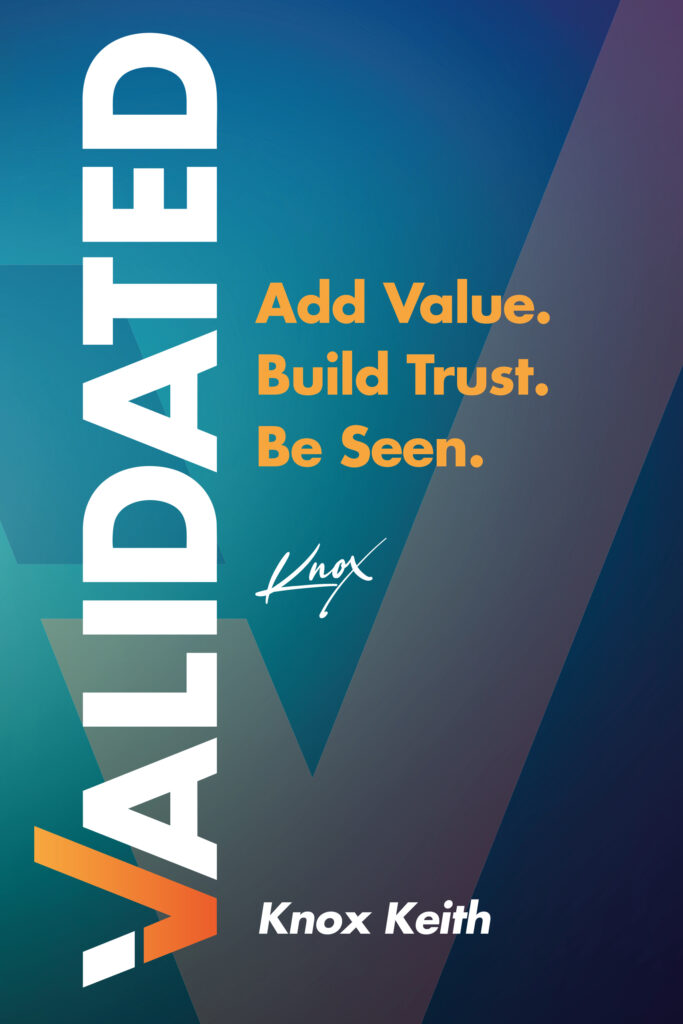
Knox Keith is a strategid advisor, corporate and MBA level instructor, Emmy-winning storyteller, and author of Validated: Add Value. Build Trust. Be Seen. He has spent 30+ years helping professionals and organizations build credibility, communicate with clarity, and show up with confidence in the modern digital world.
_________________________________________________________________________________________________________________________________________________
➡️ Get Validated: Add Value. Build Trust. Be Seen. — your roadmap out of the crisis: https://www.amazon.com/dp/B0GQ57HLXM
➡️ Join the Digital Validation™ program — https://knoxkeith.com/courses/
➡️ Give me a follow on LinkedIn: www.linkedin.com/in/knoxkeith
➡️ Subscribe to my newsletter: https://validatedbyknox.mykajabi.com/newsletter
#CHRO #HRLeadership #LeadershipVisibility #ExecutivePresence #Credibility #DigitalValidation #Signal