
It’s More Than Your Resume
There’s a conversation happening quietly inside a lot of organizations right now.
As workforce reductions have become more common, companies have had to ask a harder question: What do we actually owe the people who are leaving? Most land on some version of financial support: extra cash, extended benefits, or additional severance so employees can cover what their life demands during the gap.
That instinct is right. When someone loses a job, financial runway matters. It buys time and reduces panic.
But financial support and career momentum are two different things. And the gap between them is wider than most organizations or most professionals realize.
Cash helps people survive a transition. It doesn’t help them accelerate through one.
Because here’s what’s actually slowing people down in today’s market: It isn’t the absence of a good resume. It’s the absence of digital credibility, professional visibility, and a clear path forward in a hiring environment that has fundamentally changed.
The Old Playbook Is Broken
For decades, career transition followed a familiar sequence:
- Search job boards
- Hit apply
- Wait for the interview
That model made sense when resumes were the primary filter and hiring was largely transactional. It no longer reflects how opportunity actually moves.
Today, most hiring decisions begin well before an application is ever submitted. Recruiters are searching. Hiring managers are Googling. Peers are quietly asking around in channels and group chats. Professional reputation has become searchable—and for a large number of highly capable professionals, that reputation is completely invisible or inconsistent.
Internally, they may have been exceptional. Externally, they’re almost impossible to find.
Invisibility doesn’t just slow opportunity. In a competitive market, it stops it.
— A Note for HR and People Leaders —
The First 30–60 Days Are the Highest-Risk Window
When a reduction in force happens, your employer brand doesn’t go quiet. It gets louder—just in places you’re no longer controlling.
The story of how your company treats people on the way out is being written by the people who are leaving. Through what they post. Through what they say. And, through how quickly or slowly they are able to move forward.
The first 30 to 60 days after a layoff announcement are when that narrative is most volatile. And it’s also when most organizations have the least structure in place to shape it constructively.
What’s at stake:
- Employer brand perception among future candidates
- Internal morale for the employees who remained
- Online narratives that recruiting cycles will feel for years
- Alumni goodwill—former employees who become customers, referrals, or boomerang hires
None of those risks live in a single budget line. But they accumulate, and they compound.
When people feel like they have a path forward, they focus on what’s next — not what just happened. That shift matters more than most organizations account for.
The organizations navigating this well aren’t replacing financial support. They’re adding something specific: a practical resource that gives people productive momentum immediately—something they can use right now to strengthen how they show up professionally.
Not career counseling. Not a workshop series. A focused program that helps people rebuild visibility, sharpen their positioning, and re-engage their network with intention rather than desperation.
Some organizations share it quietly as a resource. Others are beginning to think about how it fits into a more deliberate approach to workforce transition. Either way, the cost of doing nothing has become harder to ignore.
— For the Professional in Transition —
What the Market Actually Rewards Right Now
If you were recently laid off, you’ve probably already received some version of the standard advice: update your resume, reach out to your network, apply to as many roles as possible.
None of that is wrong. But it’s incomplete. And, in some cases, it’s actively misleading about where your time and energy will have the most impact.
The apply button is one of the weakest career strategies available right now.
Thousands of candidates are moving through the same channels with nearly identical credentials. Many of them using the same AI tools to write their applications. Inside most applicant tracking systems, qualified professionals disappear before a human ever sees their name.
The professionals landing fastest aren’t necessarily applying to more jobs. They’re becoming easier to find, easier to trust, and easier to say yes to.
Before anyone hires you, they Google you. That moment—what shows up, what doesn’t, what it signals—is shaping your candidacy before you’ve said a word.
Three Things That Actually Move the Needle
1. Discoverability
You cannot be considered for opportunities people never associate with you. Most professionals dramatically underestimate how invisible they are online. They may have years of experience and a track record of real impact, but almost no discoverable professional footprint. No signal. No presence. No evidence they exist in their industry beyond a title on a profile.
Discoverability isn’t about posting more. It’s about showing up clearly and consistently enough that the right people can find you, and immediately understand why you matter.
2. Proof
Resumes tell. Digital presence shows. That distinction matters enormously right now.
The professionals moving fastest are demonstrating expertise, perspective, and professional judgment publicly. Not through self-promotion, but through participation. A thoughtful comment. A clear point of view. Consistent engagement with the conversations already happening in their space.
Over time, that creates a proof layer: Evidence of how you think, what you value, and whether you’re current and credible. It builds trust before the first conversation ever happens.
3. Warm Network Activation
Most people wait too long to activate their network and then reach out at the worst possible moment, when the ask is obvious and the relationship is cold.
A message that says “I’m looking” to someone you haven’t engaged with in years lands very differently than a warm conversation that’s been building naturally. Real network activation isn’t mass outreach. It’s consistent, low-pressure visibility that turns passive connections into active advocates: When people who think of you before you ever have to ask.
The strongest career safety net today isn’t a polished resume. It’s a professional ecosystem that keeps you top of mind before you need anything from it.
_________________________________________________________________________________________________________________________________________________
“Organizations that invest in employee digital credibility before a reduction in force see faster placement rates, lower reputational risk, and stronger alumni networks that reduce future recruitment costs.”
_________________________________________________________________________________________________________________________________________________
The Resume Is Supporting Evidence. Not the Lead.
For years, the resume was the centerpiece of every career transition. Today it’s become supporting documentation. Important, but rarely decisive on its own.
What moves decisions now is trust. Familiarity. The sense that someone already knows you, has seen your thinking, and can vouch for your credibility before the formal process even begins.
That kind of trust isn’t built in a job application. It’s built over time, through consistent visibility and professional engagement.
For professionals in transition: The sooner you understand that the market is evaluating you well before you apply, the faster you’ll be able to move.
For HR and People leaders: the window right after a reduction is the moment your culture is most visible—and most vulnerable. What you put in place during that window says more about your organization than any employer brand campaign ever could.
It’s more than a resume. It always was. The market has just finally made that impossible to ignore.
If this resonated and you want to go deeper:
For professionals: the Digital Validation™ course is a practical, self-directed system for building the kind of credibility and presence that creates real opportunity — whether you’re in transition or simply ready to show up differently. Explore the course →
For HR and People leaders: Validated explores the strategic case for digital credibility at the organizational level — why it matters, what it costs to ignore, and how leading companies are thinking about it. Learn more →
Knox Keith works with executives and organizations to close the gap between capability and how they’re perceived online — especially during moments of disruption, transition, and change.
And as always —

_________________________________________________________________________________________________________________________________________________
Frequently Asked Questions: Career Transition, Resume, and Professional Visibility
Is a resume still important in 2026’s job market?
Yes — but it’s no longer the lead. A resume is supporting documentation. What moves decisions now is trust and familiarity, and those are built before a formal application ever happens. Recruiters search, hiring managers Google, and peers ask around in channels well before anyone reviews a resume. If your digital presence is invisible or inconsistent, your resume may never get seen at all.
Why isn’t the apply button working for job seekers right now?
The volume of applications has made traditional job board applying one of the weakest career strategies available. Thousands of candidates with similar credentials are moving through the same channels, many using identical AI tools to write applications. Inside most applicant tracking systems, qualified professionals are filtered out before a human ever sees their name. The professionals landing fastest aren’t applying to more jobs — they’re becoming easier to find, easier to trust, and easier to say yes to before the formal process begins.
What is digital credibility and why does it matter for job seekers?
Digital credibility is the combination of discoverability, proof of expertise, and professional presence that allows people to find you and trust what they find. It’s the difference between a hiring manager searching your name and seeing a clear signal of who you are and what you bring, versus finding almost nothing. In today’s hiring environment, that first impression — what shows up before you’ve said a word — is shaping your candidacy in ways most professionals dramatically underestimate.
What should HR leaders provide beyond financial support during a layoff?
Financial support buys time — it doesn’t build momentum. The gap most organizations miss is practical career momentum: helping displaced employees rebuild visibility, sharpen their positioning, and re-engage their network with intention rather than desperation. Organizations that add this to their transition support see faster employee placement, stronger employer brand perception, and better alumni relationships. The first 30–60 days after a layoff announcement are the highest-risk window for employer brand narrative — what gets put in place during that window matters more than any employer brand campaign.
How does a layoff affect employer brand among future candidates?
Significantly and for longer than most organizations track. Future candidates research companies before accepting offers — and they talk to people who’ve been through transitions there. When displaced employees land quickly and speak positively about how they were treated, it becomes a recruiting asset. When they struggle publicly or feel unsupported, that narrative circulates in exactly the networks where future talent is watching. The story of how your organization treats people on the way out is being written by the people who are leaving, in public, in real time.
What is warm network activation and how is it different from mass outreach?
Warm network activation is the practice of maintaining consistent, low-pressure visibility with your professional network before you ever need anything from it — so that when a transition happens, the people around you are already thinking of you and able to advocate without being asked. It’s the opposite of mass outreach, where someone who’s been silent for years suddenly sends dozens of “I’m looking” messages to cold connections. The strongest career safety net isn’t a polished resume. It’s a professional ecosystem that keeps you top of mind before you need anything from it.
What is the ROI of investing in employee digital credibility before a layoff?
The returns show up in three places: faster employee placement reduces the window of negative public signal; stronger alumni relationships lower future recruitment costs through referrals and boomerang hires; and a cleaner external narrative during the transition protects employer Net Promoter Score among the employees who remained. None of these show up in a single budget line, but they compound — and the cost of not investing becomes measurable the next time the organization needs to hire.
_________________________________________________________________________________________________________________________________________________
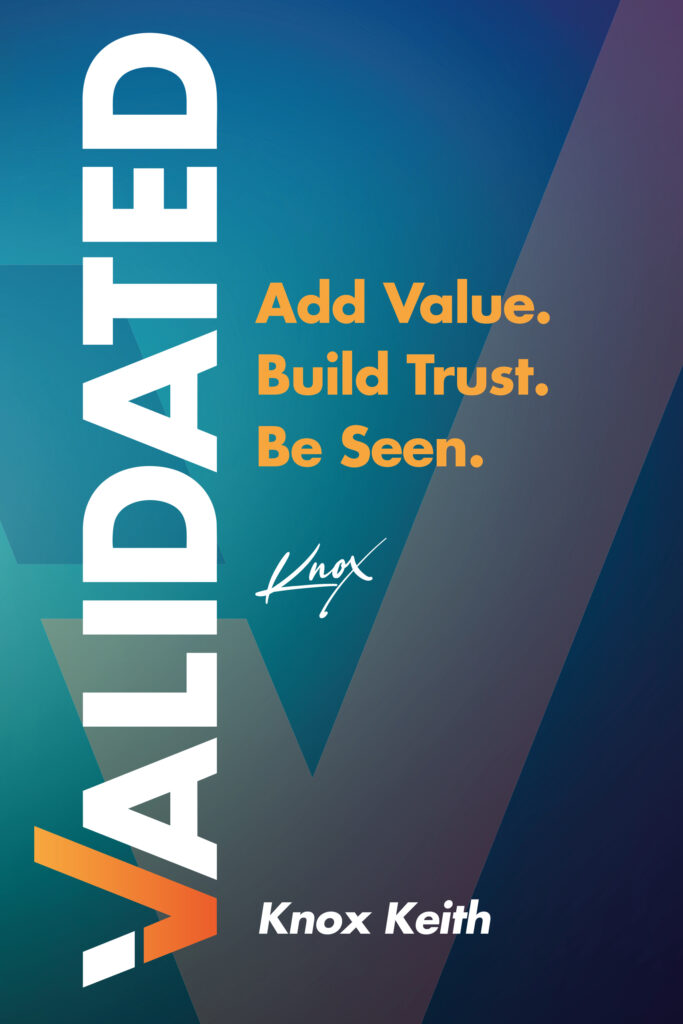
Knox Keith is a strategid advisor, corporate and MBA level instructor, Emmy-winning storyteller, and author of Validated: Add Value. Build Trust. Be Seen. He has spent 30+ years helping professionals and organizations build credibility, communicate with clarity, and show up with confidence in the modern digital world.
_________________________________________________________________________________________________________________________________________________
➡️ Get Validated: Add Value. Build Trust. Be Seen. — your roadmap out of the crisis: https://www.amazon.com/dp/B0GQ57HLXM
➡️ Join the Digital Validation™ program — https://knoxkeith.com/courses/
➡️ Give me a follow on LinkedIn: www.linkedin.com/in/knoxkeith
➡️ Subscribe to my newsletter: https://validatedbyknox.mykajabi.com/newsletter
#CHRO #DigitalValidation #CareerVisibility #Layoff #JobSearch