

Invisible Executives = Hidden Risk
Invisible Executives Are a Hidden Organizational Risk
Most organizations don’t have a leadership problem. But they do have a leadership visibility problem.
Inside the company, your executives are:
- Known
- Trusted
- Respected
- Proven
But outside? Most of the time it’s crickets.
You may have heard this story from me before: years ago, I witnessed one of our top, young executives lose a multi-million dollar deal, because he was invisible outside of our company.
And in today’s environment, invisible leadership isn’t neutral—it’s a risk and a weak signal.
What “Invisible Executive” Actually Means
This is not about personality. It is not about forcing leaders to become influencers or post every day.
An invisible executive is someone who:
- Has no visible professional presence
- Shares no perspective externally
- Provides ZERO signals of how they think or lead
No signal does not mean no capability. But today we are living in the age of the credibility gap, so no signal = no proof.
_________________________________________________________________________________________________________________________________________________
“Leadership visibility gaps contribute to longer sales cycles, lower candidate conversion rates, and measurable erosion of employer brand equity.”
_________________________________________________________________________________________________________________________________________________
Why This Didn’t Matter Before (But Does Now)
For years, leadership visibility was optional. Reputation lived inside the organization. The company brand carried the executive. PR and communications teams controlled the narrative.
Today, that model is gone:
- 95% of recruiters use LinkedIn to evaluate candidates
- Over 75% of B2B buyers say thought leadership influences purchasing decisions
- Decision-makers spend more time researching people than their companies before engaging or committing to purchase
Which means: Your executives are being evaluated—whether they show up or not.
The Hidden Risk Most Organizations Aren’t Measuring
1. Talent Attraction & Retention Risk
Top candidates don’t just evaluate roles. They evaluate leadership. They search:
- Who will I report to?
- What do they believe?
- How do they lead?
When they find:
- Minimal presence
- No perspective
- No signal
They hesitate. And in competitive markets, hesitation loses talent.
2. Employer Brand Fragility
In a recent layoffs blog, I claim that: “Your employer brand is no longer defined by what you say. It’s defined by how your people show up.”
Leadership is the anchor of this signal. If leadership is invisible:
- There’s no visible standard
- No reinforcement of values
- No external proof of culture
Which means your employer brand becomes:
➡️ fragmented
➡️ inconsistent
➡️ vulnerable
3. Layoff Amplification Risk
During layoffs, employees go public. We see it every cycle:
- “Open to work” posts
- Requests for referrals
- Sudden visibility
But here’s what’s often missing: Leadership. And silence creates a vacuum.
Research from Edelman shows:
- Employees rank “my employer’s CEO” as one of the most trusted sources of information—more than media and government
When that trusted voice is absent:
- Narratives get filled by others
- Interpretation replaces clarity
- Trust erodes faster
➡️ Silence doesn’t reduce friction. It creates it.
4. Market & Customer Trust Risk
Executives don’t just represent internal leadership. They represent the company externally. And today:
- Buyers trust individual experts more than brand messaging
- Analysts and partners look for leadership POV
If your executives don’t show up:
- Competitors define the conversation
- Your organization looks reactive instead of authoritative
5. The Performance vs. Perception Gap
This may be the most dangerous risk. You can have:
- High-performing leaders internally
- Strong operational results
But externally? No evidence. Which creates a gap between:
- what is true
- and what is perceived
And in a digital-first world, perception drives decisions.
The Misconception Holding Organizations Back
Most organizations know this, but still hesitate. Common reasons:
- “Executives are too busy”
- “We don’t want them saying the wrong thing”
- “Marketing owns external messaging”
All understandable. But flawed.
Because controlled silence is not a strategy. It’s a liability.
What Visible Leadership Actually Looks Like
This is where many organizations overcorrect. They assume visibility means:
- High volume posting
- Personal branding tactics
- Becoming an “influencer”
It doesn’t. Effective leadership visibility is:
- Occasional, thoughtful perspective
- Engagement with relevant industry conversations
- Reinforcement of company direction through authentic voice
- Clear signals of expertise and decision-making
Not noise. Proof.
A Simple Diagnostic
If you want to understand your exposure, try this: Take 5–10 leaders in your organization. Search them. Ask:
- Do they clearly demonstrate expertise?
- Is there visible proof of how they think?
- Would an external stakeholder trust what they see?
If the answer is inconsistent: It’s not an individual issue. It’s a systemic one.
What High-Performing Organizations Do Differently
Organizations that get this right don’t wait for visibility to matter. They:
- Treat leadership visibility as a capability
- Align executive voice with business strategy
- Provide guardrails—not scripts
- Build credibility before moments of scrutiny
Because they understand: You don’t build trust when you need it. You build it before.
Bottom Line
Invisible executives don’t reduce risk. They shift it—into places most organizations aren’t measuring:
- Talent decisions
- Market perception
- Employer brand credibility
- Trust during critical moments
And in a world where everyone is searchable, reviewable, and visible—Leadership silence doesn’t protect the organization. It exposes it.
For CHROs
If this resonates, a simple place to start: Audit your leadership team’s external presence. Not for activity. But for credibility.
Because visibility is optional. But credibility isn’t.
And if you have no credibility, then any visibility you have is just more noise and it’s next to impossible to build any trust.

And as always —

_________________________________________________________________________________________________________________________________________________
Frequently Asked Questions: Executive Visibility and Organizational Risk
What is an invisible executive and why does it matter?
An invisible executive is a leader with no meaningful external professional presence — no shared perspective, no visible signals of how they think or lead. It doesn’t mean they lack capability. It means the market has no proof of it. In a world where candidates, buyers, partners, and analysts research people before they engage, absence of signal isn’t neutral. It’s a credibility gap that creates real organizational risk.
How does executive invisibility affect talent acquisition?
Top candidates don’t just evaluate the role — they evaluate the leadership they’d be working under. They search for the people they’d report to and look for signals of how those leaders think, lead, and engage. When they find nothing, it creates hesitation. In competitive talent markets, that hesitation is often enough to lose a candidate to an organization whose leadership shows up with visible credibility.
Does executive visibility really influence B2B sales and partnerships?
Yes — and the data is clear. Over 75% of B2B buyers say thought leadership influences their purchasing decisions, and decision-makers consistently report spending more time researching the people behind an organization than the organization itself. When your executives aren’t showing up with visible expertise, competitors fill that space and your organization looks reactive rather than authoritative.
What’s the difference between executive visibility and executive credibility?
Visibility means people can find you. Credibility means what they find builds trust. Many organizations push executives toward visibility — more posts, more activity — without addressing whether the underlying substance is there. High-volume posting without genuine expertise and perspective creates noise, not credibility. The goal isn’t to be seen more. It’s to be trusted when you are seen.
How should CHROs approach executive visibility as an organizational capability?
Start with a diagnostic rather than a mandate. Search your top 5–10 leaders and ask honestly: does what shows up externally reflect the capability and credibility that exists internally? If the answer is inconsistent, that’s a systemic gap — not an individual one. From there, the most effective approach is building guardrails and frameworks that help executives share authentic perspective, rather than scripting or controlling their voice. Visibility built on authenticity compounds. Visibility built on messaging doesn’t.
Why do organizations hesitate to invest in executive visibility and what’s the cost of waiting?
The most common objections are that executives are too busy, that marketing owns external messaging, or that there’s risk in leaders saying the wrong thing. All understandable — but the cost of inaction is higher than most organizations measure. Every day that leadership is invisible, talent decisions, partnership conversations, and market perception are being shaped by the absence of a signal rather than the presence of one. Controlled silence is not a strategy. It’s a liability that compounds quietly until a moment of scrutiny — a layoff, a leadership transition, a competitive threat — makes it suddenly visible.
How does executive visibility affect sales cycle length and pipeline conversion?
B2B buyers consistently report that they research the people behind a company — not just the company itself — before engaging seriously. When executives have no credible digital presence, buyers have less to build confidence on, which extends the consideration phase and increases the friction before a decision. Credible executive presence shortens the trust-building window, which compresses the sales cycle and improves conversion at the consideration stage.
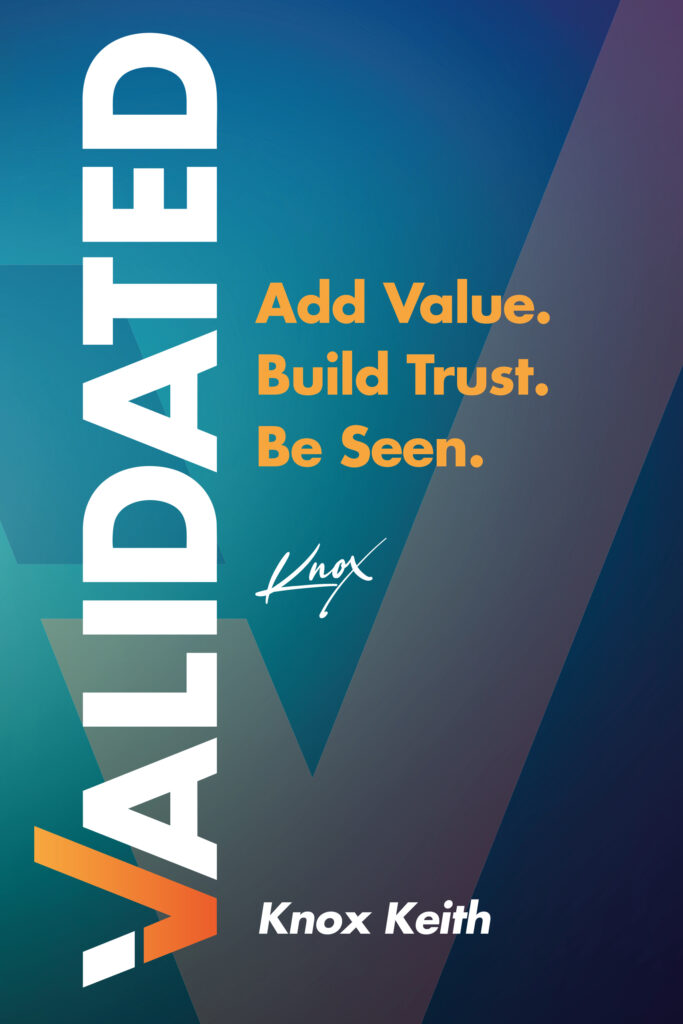
Knox Keith is a strategid advisor, corporate and MBA level instructor, Emmy-winning storyteller, and author of Validated: Add Value. Build Trust. Be Seen. He has spent 30+ years helping professionals and organizations build credibility, communicate with clarity, and show up with confidence in the modern digital world.
➡️ Get Validated: Add Value. Build Trust. Be Seen. — your roadmap out of the crisis: https://www.amazon.com/dp/B0GQ57HLXM
➡️ Join the Digital Validation™ program — https://knoxkeith.com/courses/
➡️ Give me a follow on LinkedIn: www.linkedin.com/in/knoxkeith
➡️ Subscribe to my newsletter: https://validatedbyknox.mykajabi.com/newsletter
#CHRO #HRLeadership #LeadershipVisibility #ExecutivePresence #Credibility #DigitalValidation #Signal