
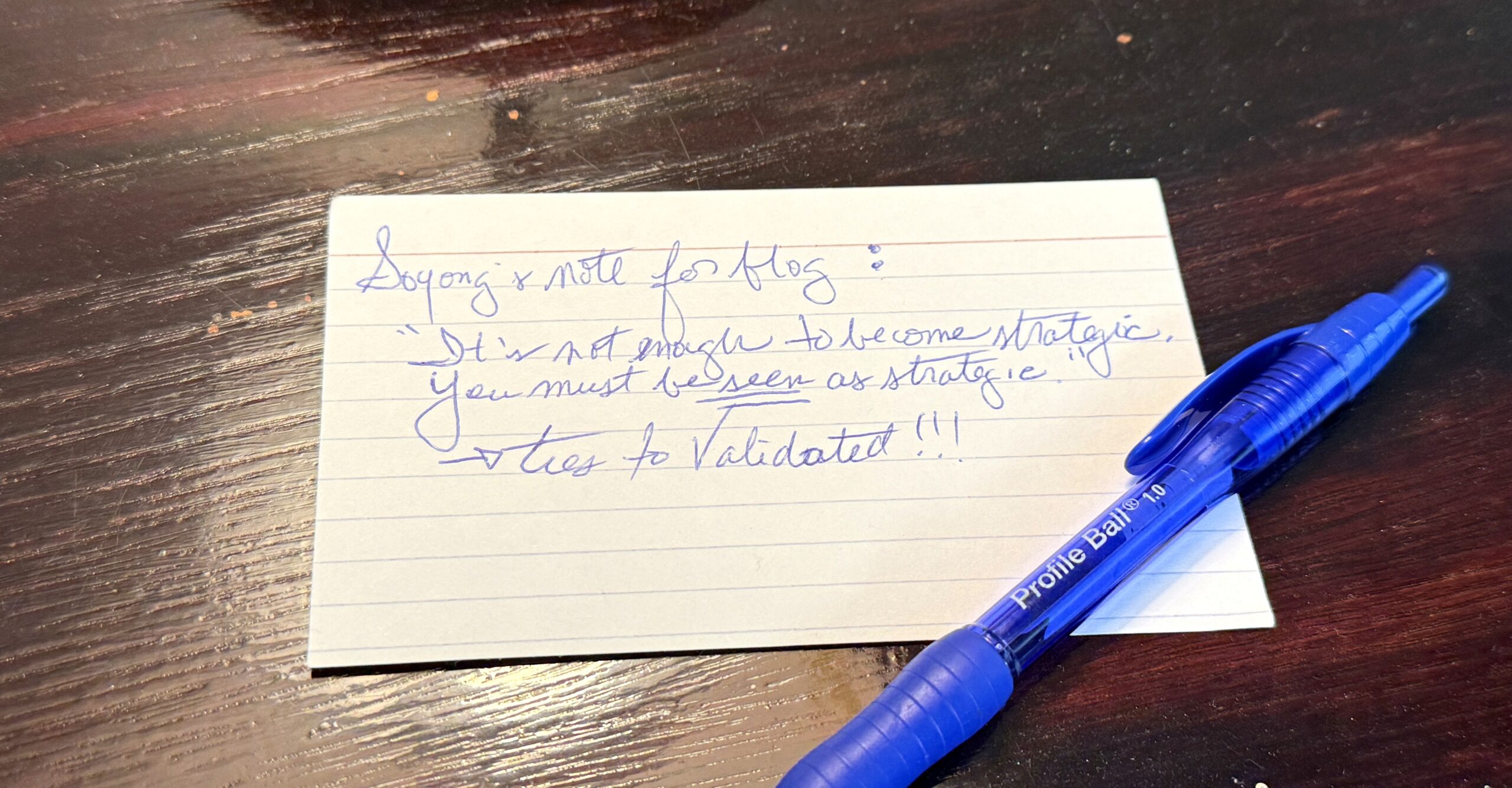
I recently finished Heidrick & Struggles’ report on the CHRO/CPO of 2030, and it left me with a question I can’t shake.
We’ve been telling HR to “become more strategic” for at least twenty years now. So why are we still saying it?
Think about everything HR has supposedly transformed itself for: E-commerce; Smartphones; The 2008 financial crisis; COVID; and, the overnight shift to remote work. And now AI.
Every one of those moments arrived with the same advice, delivered with the same urgency, like it had never been said before: HR needs to become a more strategic partner.
Twenty years of the same instruction should make anyone suspicious that the instruction itself is missing something.
Here’s what I’ve started to wonder. Maybe the problem was never that HR isn’t strategic. Maybe a lot of HR leaders already are — and nobody outside the room they’re doing it in can actually see it.
That’s where Digital Validation® started clicking for me on this one. Credibility and visibility aren’t the same thing. And, credibility that no one sees cannot influence anyone.
You can be doing the most sophisticated strategic work of your career, and if it only exists in closed-door meetings, it might as well not exist at all to the people deciding whether you get the next seat at the table.
Take succession planning as one example. The details absolutely need to stay confidential — none of that, who’s being groomed for what, how someone scored on an assessment, should ever be public. But the philosophy behind it doesn’t need that same protection.
Boards, the C-suite, executives, and employees should all be able to see how an organization actually thinks about developing its leaders. That’s not a breach of confidentiality. It’s the opposite: a message that builds the confidence and trust every board, C-suite leader, and employee needs to actually believe in how you develop people. Confidence and trust aren’t just related to credibility. They’re what credibility is made of.
I was talking this through with Soyong Jensen — Founder, Career Strategist & Coach | HR Consultant, with more than two decades in HR across sectors — and she said something that stopped me:
“People leadership is not an HR responsibility — it’s a business responsibility… becoming strategic has never been something HR can accomplish alone.”
That reframes the whole twenty-year loop. If the strategic mandate was never HR’s to carry alone, then telling HR to “be more strategic” one more time was never going to break the cycle. The company has to actually share in that ownership, not just keep assigning the ask to the same function and hoping the result is different this time.
Then she added the line I keep coming back to:
“Visibility should amplify that credibility — not become a substitute for it.”
That’s the whole argument, better than I’ve said it anywhere else. This isn’t “post more on LinkedIn.” It’s the opposite of every influencer telling you visibility is the goal.
If you’re already doing meaningful strategic work, the danger is not that you are invisible. Instead, it’s that all of that credibility stays trapped inside conference rooms behind closed doors. Nothing gets amplified and nothing reaches the people who weren’t already in the meeting.
So here’s what I’m actually trying to figure out. If a CHRO or CPO is doing deeply strategic work, and almost nobody outside the executive team knows about it — is this really a visibility problem? Or is it an organizational one, where the company never built a way for that work to be seen in the first place?
I would genuinely love to hear from CHROs, CPOs, CEOs, and board members on this — especially if you think I’ve got it backwards.
I am collecting stories and starting to conduct interviews like this for a second book on executive visibility. So if this is a conversation you’ve lived, not just theorized about, find me on LinkedIn: linkedin.com/in/knoxkeith. Let’s connect and discuss.

And as always —

_________________________________________________________________________________________________________________________________________________
Knox Keith is a strategic advisor, corporate and MBA-level instructor, Emmy-winning storyteller, and author of Validated: Add Value. Build Trust. Be Seen. He has spent 30+ years helping professionals and organizations build credibility, communicate with clarity, and show up with confidence in the modern digital world.
_________________________________________________________________________________________________________________________________________________
➡️ Get Validated: Add Value. Build Trust. Be Seen. — your roadmap out of the crisis: https://www.amazon.com/dp/B0GQ57HLXM
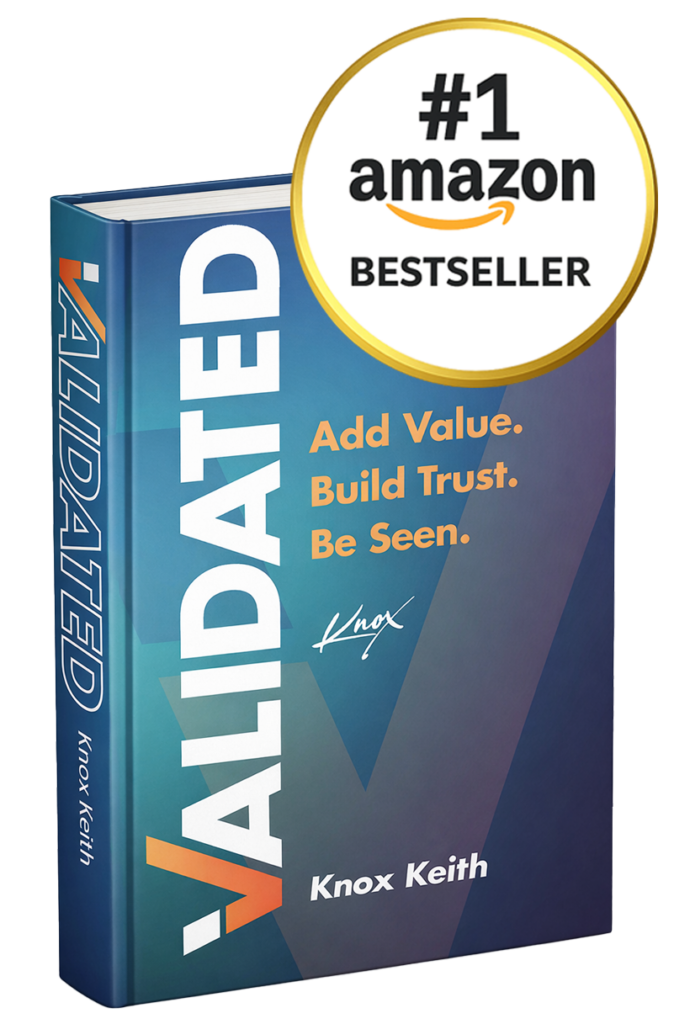
➡️ Join the Digital Validation™ program — https://knoxkeith.com/courses/
➡️ Give me a follow on LinkedIn: www.linkedin.com/in/knoxkeith
➡️ Subscribe to my newsletter: https://validatedbyknox.mykajabi.com/newsletter
_________________________________________________________________________________________________________________________________________________
Frequently Asked Questions (FAQs): It’s Not Enough to Become Strategic. You Must Be Seen as Strategic.
For CHROs & CPOs
I’m already doing strategic work. Why does visibility matter?
Because credibility that no one sees can’t influence anyone. You can be running the most sophisticated leadership pipeline in the company, but if it only exists in closed-door meetings, it might as well not exist to the people deciding whether you get the next seat at the table. Doing the work and being seen doing it are two different jobs — and most CHROs/CPOs have only been trained to do the first one.
Isn’t this just another version of “post more on LinkedIn”?
No — it’s closer to the opposite. Visibility should amplify credibility, not substitute for it. Posting without substance behind it is noise. The argument here is that if you already have the substance, trapping it in conference rooms wastes it. Build the credibility first. Then make sure it’s visible to the people who need to see it.
How do I make strategic work visible without breaking confidentiality?
Separate the specifics from the philosophy. The details of succession planning — who’s being groomed for what, how someone scored on an assessment — should never be public, and that’s non-negotiable. But how you think about developing leaders, the principles behind your approach, is shareable. That philosophy is what builds confidence and trust with boards, the C-suite, and employees — without compromising a single confidential detail.
For CEOs & Boards
What does “shared ownership” of people leadership actually look like?
It means the CEO and executive team treat leadership development, succession, and culture as outcomes they own alongside HR — not outcomes they’ve delegated to HR and will only revisit if something breaks. Soyong Jensen put it directly: becoming strategic has never been something HR could accomplish alone. If the mandate stays siloed with HR, the same “get more strategic” conversation repeats every few years, under a different name.
Why should a CEO care about their CHRO’s or CPO’s visibility?
Confidence in leadership pipelines is thin industry-wide — a large share of boards report low confidence specifically in succession planning. A CHRO/CPO with a credible, visible point of view on how the organization develops leaders is one of the few things that actually closes that confidence gap. That visibility has to be resourced and backed by the CEO and comms function — it’s not a side project for one executive to carry alone.
For HR Leaders & Organizations More Broadly
What is Digital Validation®?
Digital Validation® is the practice of making real, credible work visible to the people who need to trust it — the discipline of closing the gap between doing meaningful work and being recognized for it. It’s not about manufacturing a presence; it’s about ensuring substance that already exists doesn’t stay invisible to the CEO, the board, your peers, or the public. Credibility and visibility aren’t the same thing, but one without the other leaves real work underleveraged.
Why do organizations keep telling HR to “become more strategic” without anything changing?
Because the instruction has been aimed at the wrong target. E-commerce, mobility, 2008, COVID, remote work, and now AI have each arrived with the same advice to HR, delivered with the same urgency, as if it were new. Twenty years of repeating the same instruction with the same result suggests the instruction itself is missing something — namely, that the rest of the organization has to share ownership of the outcome, not just keep assigning it to HR.
For Anyone Following This Conversation
Is this a critique of the Heidrick & Struggles report?
No — it’s a response to one sentence buried in it, not a rebuttal of the whole piece. The report’s five challenges and three focus areas are sound. The question this piece raises is what happens after a CHRO/CPO does that work: whether it’s ever actually seen by the people deciding their credibility, and whose job it is to make sure it is.
Who is Soyong Jensen?
Soyong Jensen is the Founder of a career strategy and coaching practice, and an HR Consultant with more than two decades of HR experience across sectors. She reviewed an early draft of this piece and pushed back on parts of it — several of her points, quoted above, ended up sharpening the argument more than anything in the original draft.
How can I be part of the second book on executive visibility?
If you’re a CHRO, CPO, CEO, or board member with a real story about this — whether it confirms this argument or contradicts it — reach out on LinkedIn: linkedin.com/in/knoxkeith. Lived experience is what this research is actually looking for, not agreement.