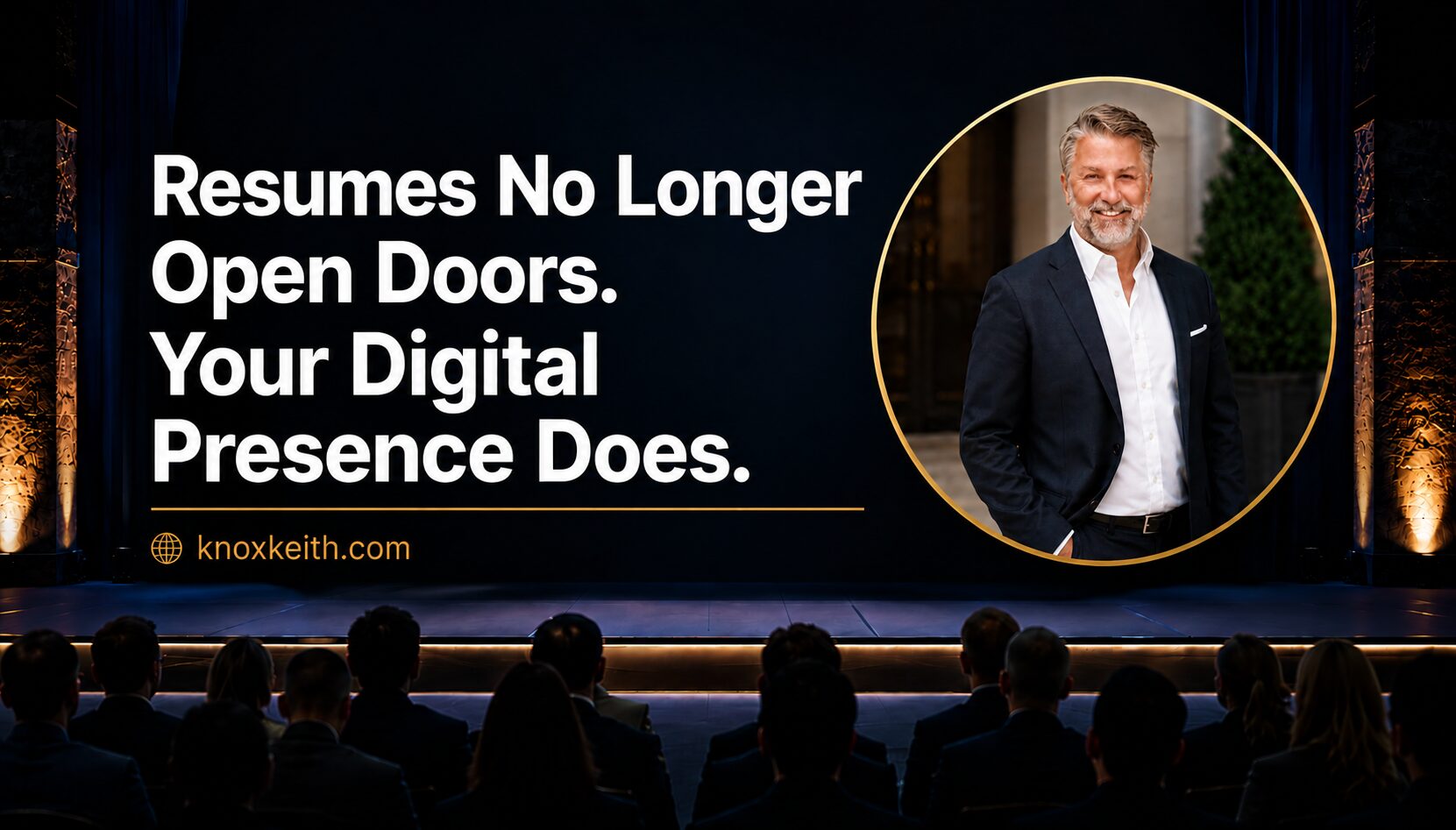
For most of my career, the resume was the credential. Formatted right and worded right, it opened doors.
Company names. Job titles. Bullet points. Action verbs. Keywords galore.
It worked, for a while. But doesn’t anymore. Not the way it used to.
Before someone hires you, promotes you, partners with you, or puts you on a shortlist for a board seat, they Google you. Not your resume. You.
That single shift changes how CHROs need to think about talent, both the talent they’re trying to attract and the talent already sitting inside their organization.
Why the Resume Stopped Being Enough
The resume was built for a slower world. Information was harder to find. Networks were smaller. Verification took time and a phone call to a reference who might not call back.
In that world, a resume was a declaration: here’s who I say I am. Nobody could easily check.
That world is gone. AI can generate a polished resume in ten seconds. Titles get inflated. Buzzwords get recycled. A declaration doesn’t carry the weight it used to, because everyone can produce one that looks credible.
So the question shifts. Not “what does this person claim,” but “what can I actually verify?”
Digital Validation™: The Proof Layer
I call this Digital Validation™, the disciplined building of a strong, consistent, professional online presence that earns trust and creates real opportunity.
It’s not a resume replacement. It’s the evidence layer that sits underneath and around it: how someone shows up, communicates, engages, and holds a consistent professional identity over time. Not what they claim about themselves. What’s actually visible when someone looks.
For CHROs, this shows up in two places at once. It’s how your organization evaluates candidates walking in the door. And it’s how the market evaluates the leaders already walking your halls.
The Talent That Looks Identical on Paper
Two candidates can present nearly the same resume. Same degree, similar title, comparable years of experience. On paper, a coin flip.
Search their names, and the flip disappears. One shows up with clarity, perspective, and a track record of thoughtful engagement in their field. The other has a static profile picture and nothing else.
That gap is invisible in an ATS (Applicant Tracking System). It is not invisible to a hiring manager doing five minutes of homework before a first call. And increasingly, it is not invisible to the board member deciding who gets the next opportunity that was never posted at all.
The Opportunities That Never Get Published
This is the part most talent strategies miss entirely.
A meaningful share of senior roles, board seats, advisory positions, and strategic partnerships are filled before a job description ever exists. Someone thinks of a name. They search that name. What they find either confirms the instinct or ends it.
No posting. No application. No formal process a recruiting team can influence.
This is the unpublished opportunity market, and it runs almost entirely on digital reputation. If a leader inside your organization is doing exceptional work but has no visible footprint, they are structurally excluded from that market, no matter how good the work is. The opportunity simply never finds them, because there was nothing to find.
A fully optimized LinkedIn presence is what makes someone discoverable in that moment. Not a highlight reel. A consistent, credible signal that shows up when someone else is doing their homework on your behalf, whether you know they’re looking or not.
Why This Belongs on the CHRO’s Desk
This isn’t a personal branding exercise for individuals to handle on their own time. It has direct implications for three things every CHRO already owns:
Recruiting. Candidates with a credible digital presence are easier to evaluate and cheaper to reduce risk. Weak or absent presence adds friction and uncertainty to every stage of the process.
Retention and succession. Leaders who are discoverable get discovered, sometimes by your competitors, sometimes by boards, sometimes by opportunities you’ll never see coming. Helping your best people build genuine credibility is a retention strategy as much as it’s a development one. Ignoring it doesn’t stop the search. It just means you have no visibility into who else is looking.
Employer brand. Every employee’s digital presence contributes to how your organization is perceived from the outside, whether HR manages it or not. A workforce with strong, consistent professional visibility is a quiet but powerful signal about the caliber of people you attract and keep.
This Isn’t About Becoming an Influencer
To be clear about what this isn’t. It’s not about dancing on TikTok, chasing viral posts, or turning every employee into a content creator.
It’s about professional proof. Clarity, consistency, and a presence that reflects the actual expertise already inside your organization. That’s a very different bar than “post more,” and it’s one leadership development programs have largely ignored.
The Resume Isn’t Dead. It’s Just the Opening Line.
The resume can still get you in the room, sometimes. But it’s the starting point now, not the deciding factor.
Credibility gets built through consistency and validation over time, in public, where people can actually see it.
The organizations that treat digital presence as a leadership development priority, not an afterthought, will have a real advantage in recruiting, retention, and reputation. The ones that don’t will keep wondering why their best people keep getting found by someone else first.
Visibility gets attention. Validation builds trust. And trust is what gets people chosen, for the job that was posted and the one that never was.
And as always —

_________________________________________________________________________________________________________________________________________________
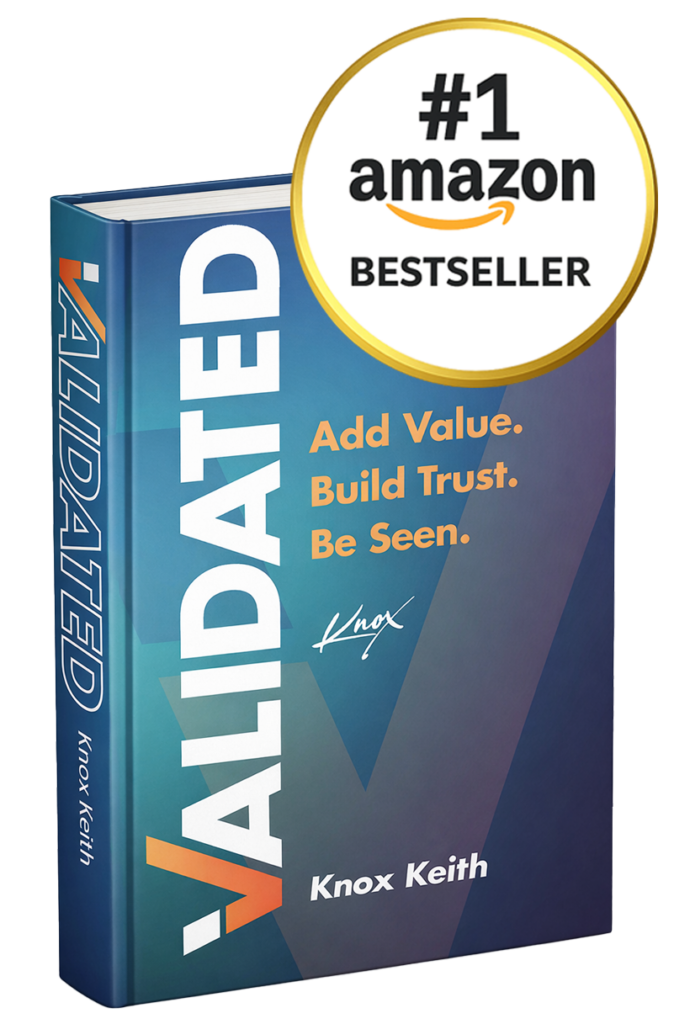
Knox Keith is a strategic advisor, corporate and MBA-level instructor, Emmy-winning storyteller, and author of Validated: Add Value. Build Trust. Be Seen. He has spent 30+ years helping professionals and organizations build credibility, communicate with clarity, and show up with confidence in the modern digital world.
_________________________________________________________________________________________________________________________________________________
➡️ Get Validated: Add Value. Build Trust. Be Seen. — your roadmap out of the crisis: https://www.amazon.com/dp/B0GQ57HLXM
➡️ Join the Digital Validation™ program — https://knoxkeith.com/courses/
➡️ Give me a follow on LinkedIn: www.linkedin.com/in/knoxkeith
➡️ Subscribe to my newsletter: https://validatedbyknox.mykajabi.com/newsletter
_________________________________________________________________________________________________________________________________________________
Frequently Asked Questions
What does “Digital Validation” mean for HR leaders?
Digital Validation™ is the disciplined building of a strong, consistent, professional online presence that earns trust and creates real opportunity. For CHROs, it’s the evidence layer that supports every hiring, promotion, and succession decision, showing what’s actually visible about a person rather than what a resume claims.
How much of the executive job market is unpublished?
A significant share of senior roles, board seats, and advisory positions are filled through referral and reputation before a job description is ever written. Leaders without a credible digital presence are effectively invisible to that market, regardless of how strong their internal track record is.
Is this the same as personal branding or influencer content?
No. Digital Validation is about professional proof, not follower counts or viral posts. It’s closer to a credibility audit than a content strategy, focused on clarity, consistency, and verifiable expertise.
Why should this sit with the CHRO rather than individual employees?
Because it directly affects recruiting cost, retention risk, succession readiness, and employer brand, all of which the CHRO already owns. Leaving it to individual initiative means the organization has no visibility into who is being discovered, by whom, or for what.