
The Best Leadership Lesson I Learned This Week Came From a Fishing Boat
I am not a big fisherman. So, I never thought I’d write about it.
My friend Will Nelson, now he’s a fisherman. Loves it. Tells wonderful stories about fishing with his dad growing up.
Me? I like it. But until last year, I hadn’t been fishing since my kids were in Indian Guides at the Y and I bought them Zebco reels for our campouts.
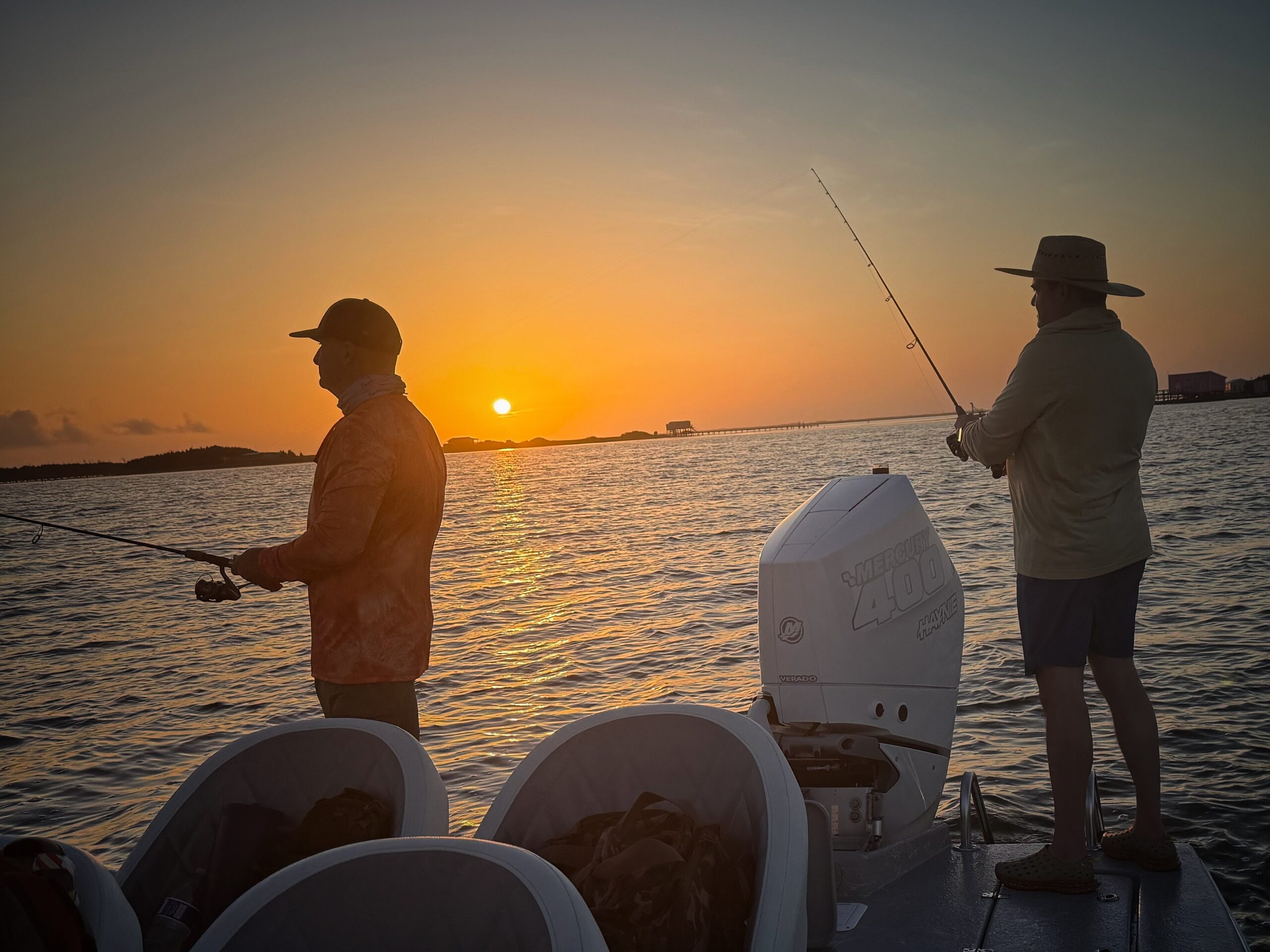
Then two years ago, an old friend invited a group of us down to Port A (Port Aransas, if you’re not a local) to fish with a guide he knows for a couple of days.
So we went. Up at 0445. Gulping coffee to make the boat by 0545.
After years of being a morning person, I’m not one anymore. But for this? For this I will make an exception.
Because I rediscovered something I’d forgotten. The power of being off the grid. And the power of being unreachable for a couple of days.
Let me explain.
Three Generations of the Same Lesson
Growing up, my grandfather, Poppy, took me fishing below the Lake Livingston Dam. We’d bottom feed for catfish with chicken liver and worms, and if we did well, we’d have a fish fry that evening. Those weren’t just fishing trips. They were some of my first lessons in patience. In presence. In spending uninterrupted time with someone who mattered.
My parents had it easier than I did, in a way. When they were building their careers, their parents were right there to fill in the gaps, for weekend trips and summer vacations (can you say Camp Grandma & Grandpa?). They were there to teach this kid how to bait a hook when Mom and Dad were working.
I didn’t have that luxury for my own kids.
Their grandparents weren’t the outdoorsy, country type. They didn’t fish, didn’t camp, and didn’t run a two-week summer camp! So when my kids joined Indian Guides at the Y, I bought them Zebco reels and figured I’d be the one to carry it forward.
I showed up for those campouts. I want to be clear about that. But if I’m honest, I wasn’t always there. Not fully. That was the height of my “always on” years, and even standing at a lake with my own kids, part of me was still checking a phone, still running numbers on a deal, still half a step outside of the moment.
I taught them how to cast. But I don’t know if I ever taught them how to be still.
So when I got in that boat in Port Aransas at 0545, two years ago, something cracked open that I didn’t expect. I wasn’t just fishing again. I was finally receiving the lesson I’d spent years trying, imperfectly, to ignore.
Patience. Presence. Uninterrupted time with people who matter. Poppy gave me in my youth. I tried to give it to my kids and only half succeeded, because I hadn’t fully learned it myself yet.
At 57, I think I finally have.
This year’s trip looked a lot like last year’s. We were after trout and black drum. And after cleaning the fish, we had an old fashioned fish fry. Hush puppies and all. The same type of afternoon that Poppy and I used to have so many lifetimes ago.
Again, I don’t think the fishing was the point.
I’ll remember two days where none of us reached for our phones. No email. No Slack. No conference calls. The only notifications came from a fishing rod bending toward the water and a bunch of guys cheering each other on or making fun of someone for not being able to pull the fish into the boat.
The Path to “Success” Told Us to Stay “On” All The Time
As executives, many of us were trained to believe our value comes from staying connected. Responsive. Available. Productive. Efficient.
Early in my career, recovery was never a part of any conversation. Billable hours were. Responsiveness was. Multitasking was.
Working nights, weekends, and over vacations wasn’t questioned. It was expected. Working 100 hours in a week was a badge of honor and pride: I will out grind you! And the message was clear: the more available you are, the greater your perceived value became.
Rest, recovery, recharge, wellness? Never discussed. In a cutthroat corporate environment, bringing it up felt like handing someone a weapon to use against you. Vulnerability wasn’t safe. It was a liability. So the cortisol stayed high, and we called it commitment to our job and our companies.
Looking back, I think a lot of leaders confused busyness with effectiveness, and importance. I know I did. And I passed some of that along, without meaning to, to my own kids at the very campouts that were supposed to be about slowing down.
The pattern shows up in the numbers, too. A recent Aflac survey found 72% of U.S. workers are experiencing moderate to high stress at work, the highest level in seven years. And nearly 84% of U.S. executives admit they’ve cancelled a vacation to keep working. We didn’t just build this culture. Many of us are still living inside it.
Fishing Does Not Care About Your Calendar
The tide doesn’t speed up because you have a board meeting next week. The fish don’t bite because you’re behind on email. Nature runs on its own schedule. You can fight it, or you can settle into it.
For two days, there was nothing to optimize. No inbox to clear. No dashboard to refresh. No meeting to prep for. Just water, wind, conversation, and long stretches of comfortable silence.
I’d forgotten how rare that has become.
Maybe This Is the Real ROI
Organizations spend billions every year trying to improve engagement, reduce burnout, and develop better leaders. Those investments matter. Workplace burnout alone is estimated to cost businesses over $300 billion a year in lost productivity, so this isn’t just a wellness issue. It’s a business one.
But sometimes I wonder if we’ve overlooked something simpler: people need permission to disconnect.
Not because they’re weak. Not because they’re burned out. Because recovery is part of performance.
Elite athletes understand this. Professional musicians understand this. Even race cars spend time in the pit before they go back on the track.
The data backs them up. An Ernst & Young study found that for every additional 10 hours of vacation an employee used, their year-end performance rating improved by 8%. Rest isn’t time away from performance. It’s part of how performance gets built.
Yet a lot of leaders still believe slowing down means falling behind. It doesn’t. Recovery isn’t the opposite of productivity. It’s what makes productivity sustainable.
What CHROs Should Be Asking
As organizations keep investing in AI, automation, and productivity tools, there’s another question worth asking.
Are we building cultures where people are expected to be constantly available and constantly “on,” or cultures where people can consistently perform at their best? Those aren’t the same thing.
Less than half of U.S. workers say they actually feel comfortable disconnecting after hours or while on vacation, according to a 2025 Mind Share Partners survey. That’s the gap CHROs are actually managing. Not a lack of PTO policy. A lack of permission.
Technology has made work faster. It hasn’t made people healthier. If anything, it’s made intentional recovery more important than ever.
Because the leaders who make the best decisions aren’t always the busiest ones. They’re the ones with enough margin to think clearly.
What I’m Taking Home
When we headed back to the dock, the fish were in the cooler. But the real value of the trip had very little to do with what we caught.
It came from a sunrise over the bay. Old friendships, now framed by the fact that we’re all executives carrying some version of the same weight. Hours of uninterrupted conversation. And three generations of the same lesson, finally learned.
Poppy taught me patience below a dam in Lake Livingston. I tried to teach my kids the same thing at Y campouts, half present, still tethered to a phone that I couldn’t put down.
It took me until 56, and a boat off Port Aransas, to actually practice what both of them were trying to show me.
It’s not another productivity system. It’s creating enough space to hear yourself think. And granting yourself permission to disconnect to recover and recharge.
That’s the real catch.

And as always —

_________________________________________________________________________________________________________________________________________________
Knox Keith is a strategic advisor, Emmy-winning storyteller, and the creator of the Digital Validation™ framework. He helps executives and organizations build credibility that earns trust and creates real opportunity.
_____________________________________________________________________________________________________________________________________________________
➡️ Get Validated: Add Value. Build Trust. Be Seen. — your roadmap out of the crisis: https://www.amazon.com/dp/B0GQ57HLXM

➡️ Join the Digital Validation™ program — https://knoxkeith.com/courses/
➡️ Give me a follow on LinkedIn: www.linkedin.com/in/knoxkeith
➡️ Subscribe to my newsletter: https://validatedbyknox.mykajabi.com/newsletter
_____________________________________________________________________________________________________________________________________________________
Frequently Asked Questions
Why is rest and recovery important for executive performance?
Recovery isn’t the opposite of productivity, it’s what makes productivity sustainable. Research backs this up: workplace burnout costs businesses over $300 billion a year in lost productivity, and an Ernst & Young study found that year-end performance ratings improved 8% for every additional 10 hours of vacation an employee used. Leaders who build in recovery time make clearer decisions, not fewer of them.
How can busy executives actually disconnect without falling behind?
Start small. A two-day trip, a phone left in the truck, a single morning without email is enough to break the always-on pattern. The goal isn’t a permanent vacation. It’s proving to yourself that the business survives without you checking in every ten minutes, and that you come back sharper for having stepped away.
Does taking time off really improve productivity, or is that just a nice idea?
It’s backed by data, not just intuition. Well-rested employees have been shown to be significantly more productive, and companies that treat vacation as a performance driver, not a perk, see better retention and stronger year-end results.
Why do so many leaders struggle to give themselves permission to rest?
Many of us came up in a culture where responsiveness, multitasking, and long hours were rewarded and rest was treated as vulnerability. That training runs deep. Less than half of U.S. workers say they feel comfortable fully disconnecting after work or on vacation, which shows this isn’t a personal failing. It’s a cultural one.
What should CHROs and CGOs take away from this?
The real gap isn’t PTO policy, it’s permission. Organizations that want engaged, high-performing leaders need to model disconnection at the top, not just offer it as a benefit on paper. When executives visibly rest and recover, it gives everyone else in the organization permission to do the same.