
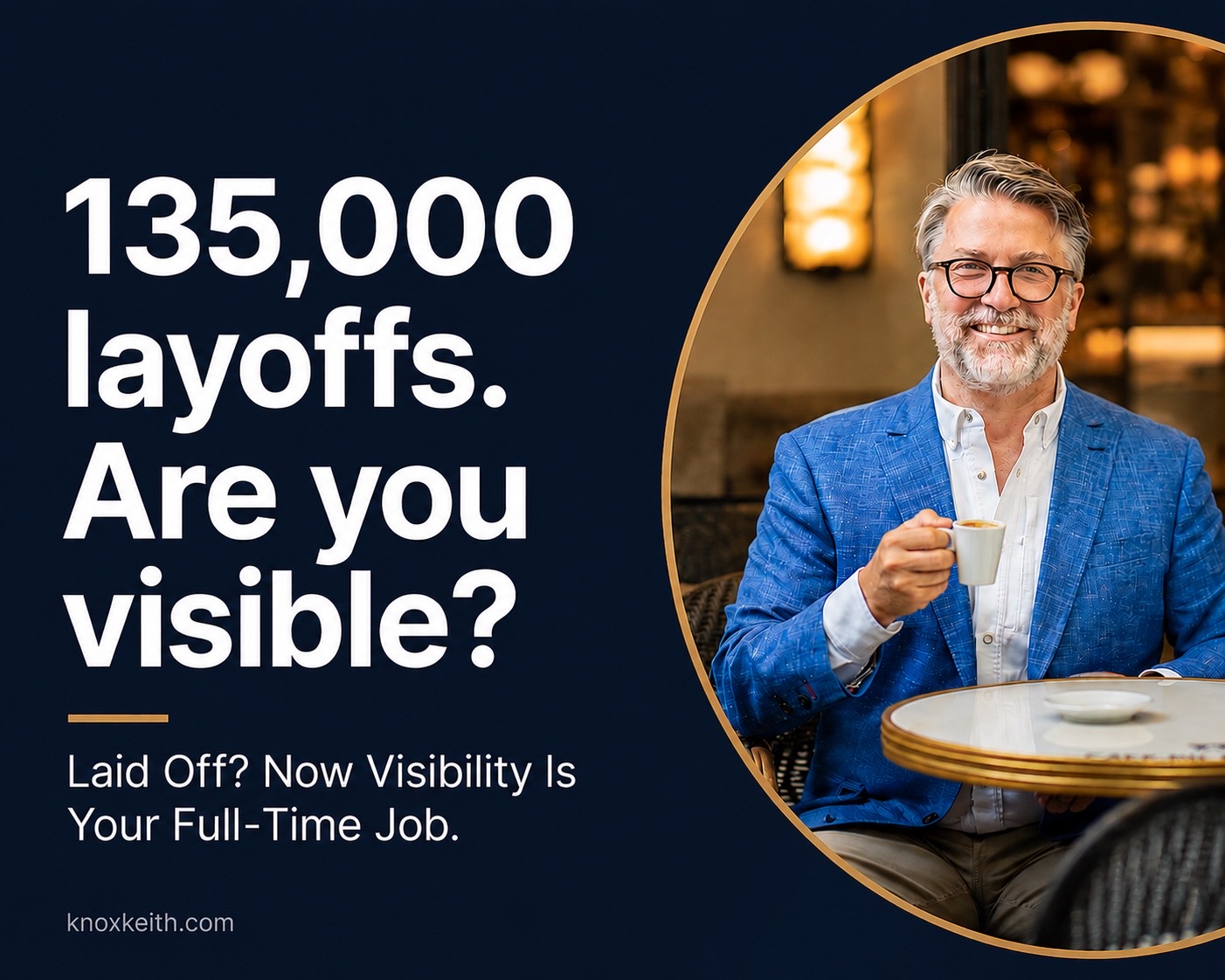
How to recover after a layoff in 2026 – and build the professional presence that protects you long-term.
135,000 tech layoffs in 2026. And we’re not even close to done.
Cisco. Meta. Intuit. LinkedIn. Walmart. And the list keeps growing! But what’s different about this wave is that these aren’t struggling companies making desperate cuts. LinkedIn laid off 875 people while posting 12% revenue growth. Walmart’s restructuring memo didn’t even mention AI. These are healthy organizations optimizing their org charts – and people doing good work are disappearing anyway.
I’ve been watching these cycles since I was laid off myself, back in 2003. Post-dot-com. I thought that was the bottom. It wasn’t. And if you’re reading this because you just got the news or because you’re watching colleagues get walked out the door and are wondering if you’re next, here’s what I know after two decades of watching people navigate this:
The people who bounce back fastest aren’t always the most qualified. They’re the most visible.
How to Recover After Layoff: What Actually Works in 2026
Your performance review didn’t protect you. Your tenure didn’t either. That’s a hard thing to sit with. But it’s also clarifying.
What can accelerate your employment recovery is how well the right people know who you are and what you bring to the table. Not everyone. The right people. And most of us have never built that intentionally. Because we were never taught to and we never had to. Until now.
The Visibility Paradox
The moment you most need people to know who you are is the exact moment you feel least like putting yourself out there.
After a layoff, most people do one of two things: go quiet and wait, or fire off applications to everything that looks remotely relevant. Neither works well.
Silence keeps you invisible. Spray-and-pray burns you out and produces thin results.
What works is reframing visibility — not as self-promotion, which makes most people cringe — but as giving your network information on seeing your value.
You cannot do this if you don’t post and don’t share the knowledge you possess. If you’re silent on platforms like LinkedIn, you’re not being humble. You are remaining invisible.
People want to help. But you have to show them your value. You can’t just tell them.
You show them by being social. By engaging with other people’s posts through insightful comments. By asking questions. By sharing stories and anecdotes that support their post. And, yes, of course, through your own posts too. But right now, comments will earn you far more visibility.
But when you’re playing the humble game, people don’t see you and they don’t know how to help you or that you even need help.
The Structural Signal You Shouldn’t Ignore
Coinbase just announced that it’s eliminating all “pure manager” roles — replacing them with “player-coaches” who lead teams and contribute as individual experts. Maximum five layers between executives and everyone else.
This isn’t just a Coinbase story. It’s a preview of where the org chart is heading.
The people most at risk in restructurings like this aren’t the ones doing bad work. They’re the ones whose work has been invisible — coordinating, facilitating, managing processes without leaving a trail of documented expertise and impact. If your manager couldn’t describe your specific value to someone outside the company, that’s a vulnerability worth taking seriously.
_________________________________________________________________________________________________________________________________________________
A note for HR and people leaders reading this:
The same visibility gap that makes individuals vulnerable is a liability at the organizational level. When companies can’t clearly inventory what their people know and what they’ve built, workforce decisions get made on titles and org charts instead of actual capability. CHROs managing layoffs right now — and the talent pipelines that follow — face a parallel challenge: the employees who survive cuts are often the ones who made their skills legible inside the organization, not just the ones who performed well quietly. If your company is restructuring, the harder question isn’t who to cut. It’s whether you actually know what you have. That’s a skills visibility problem — and it’s also an employer brand problem, because how you treat people on the way out shapes who will trust you on the way back in.
_________________________________________________________________________________________________________________________________________________
What Visibility Actually Looks Like Right Now
This isn’t about becoming an influencer or posting every day. Here’s what it practically looks like for someone in transition:
- Document your wins while they’re fresh. Projects, metrics, outcomes — not job titles and dates. “Reduced onboarding time by 30%” is visible. “Led onboarding initiatives” is forgettable. Write it down now, before the details fade.
- Make the LinkedIn post. The one that feels uncomfortable. Name what you’re looking for — specific role type, industry, the kinds of problems you love solving. Vague posts get vague responses. Specific posts give your network something to work with. The support you’ll get will surprise you.
- Reconnect before you ask. Before you ask, “can you help me find a job,” reach out to people you haven’t talked to in a while just to connect. Ask what they’re working on. Be curious. The goodwill you build makes the eventual ask feel natural rather than transactional.
- Share something from your expertise. One observation. One lesson from a project. A reaction to something happening in your industry. One post a week, done consistently, builds compounding awareness. People start associating your name with your subject matter — and that’s what gets you referred.
- Be directional, not just loud. Think about who specifically needs to know you exist: hiring managers at target companies, peers in adjacent roles, former colleagues who’ve landed somewhere you’d love to be. Visibility isn’t broadcast — it’s strategic.
The Layoff as a Visibility Reset
Here’s the reframe that helped me most after 2003, and that I’ve seen help a lot of people since:
Most professionals are invisible at their jobs — not because they’re not good, but because great work delivered quietly inside a company doesn’t leave a trail anyone outside can follow. You may have led something remarkable. Solved something hard. Built something that mattered. But if no one outside your immediate team knows it happened, it doesn’t help your career.
A layoff forces you to make your track record legible for the first time. That’s uncomfortable. But it’s also a real opportunity. It might be the first time you’ve had to articulate your value clearly, to the right people, in a way that actually lands.
The people I’ve watched bounce back fastest all did a version of the same thing: they started showing up — online, in conversations, in their communities — as someone worth knowing. They shared what they knew. They talked about what they cared about. They made it easy for people to see them, understand them, and advocate for them.
That’s not a job search tactic. That’s Digital Validation™ — the practice of building a professional presence that works for you whether you’re actively looking or not.
This Is a Moment, Not a Verdict
Layoffs are one of the three hardest things we can go through in life (the other two are death of a family member and an IRS audit). So let yourself feel. For me it was grief, identify, worry, frustration, embarrassment. And, all of it was valid.
Don’t rush into job search mode before you’ve started processing it. Even a few days makes a real difference in the quality of what comes next.
Then start building your visibility — not to perform your way back to employment, but because the people who can help you deserve the chance to find you.
This moment is hard. It’s also a reset. And resets have a way of taking you somewhere better than where you were headed.
Ready to Build the Visibility That Protects Your Career?
If you want a structured framework for showing up with credibility and confidence — not just during a job search, but as a long-term career practice — I wrote the book on it.
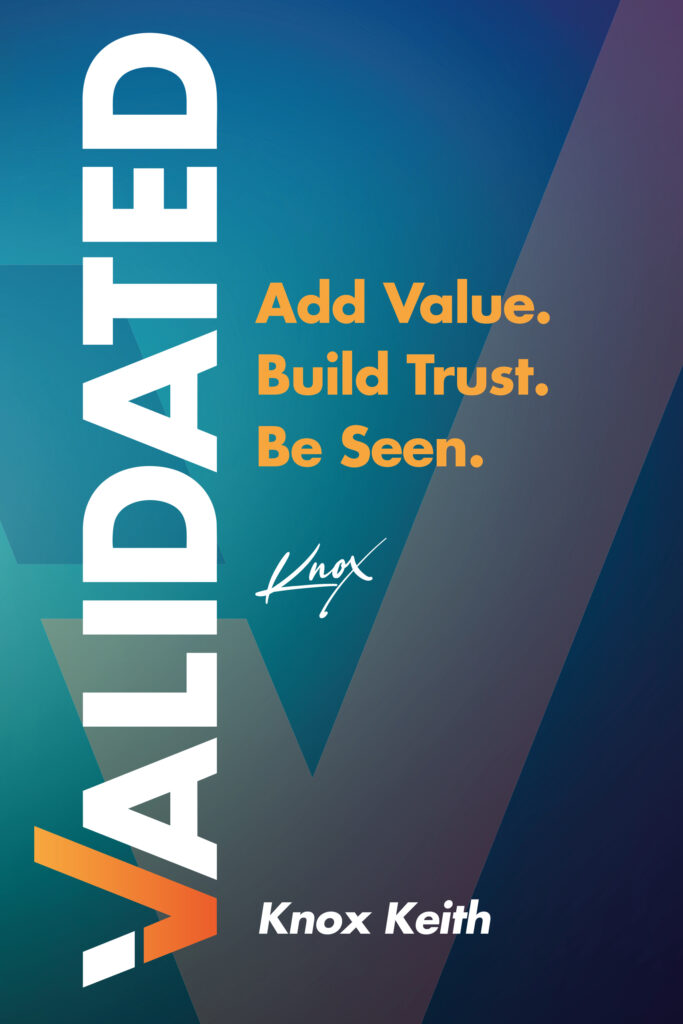
Validated: Add Value. Build Trust. Be Seen. walks you through the Digital Validation™ framework: clarify your message, optimize your LinkedIn presence, build a professional persona rooted in who you actually are — not performative branding.
And if you’re in active transition and want tactical, step-by-step guidance for navigating life after a layoff, my Digital Validation™ Course was built specifically for this moment.
You’re not starting over. You’re becoming more visible. There’s a difference.
>>>>>>>>>>>>>>>><<<<<<<<<<<<<<<<
Frequently Asked Questions About Recovering After a Layoff
What should I do first after being laid off?
Give yourself a few days before going into full job search mode. Then, while everything is still fresh, document your wins — projects, metrics, outcomes. You’ll need them for your resume, your LinkedIn profile, and every interview conversation going forward. The people who start here move faster later.
How long does it take to find a job after a layoff?
It varies by industry, level, and market. But in 2026, most professionals are finding the search takes longer than previous cycles. The candidates moving fastest are combining active applications with strong network visibility: engaging and posting on LinkedIn, reconnecting with former colleagues, making it easy to be referred. Passively job searching — applications only, no presence — tends to extend timelines significantly. Remember, recruiters and hiring managers are going to Google you before they call you for an interview.
Should I post on LinkedIn about being laid off?
Yes — and be specific. A post that names the role type you’re targeting, the industries you’re interested in, and the problems you love solving gives people the information they need to actually help you. Most people who make this post are surprised by how their network responds.
What’s the difference between a job search and building visibility?
A job search is reactive — you apply to what’s posted and wait. Visibility is proactive — you show up consistently so opportunities find you, and so your name comes to mind when someone in your network hears about an opening. In a tight market, visibility is often the difference between being considered and being overlooked.
Is it okay to be selective about what job I take after a layoff?
If you have a financial buffer, yes — and it may be one of the most important decisions you make. Many people find that a layoff redirected them somewhere genuinely better. Taking the first thing that comes out of fear often leads to repeating the same cycle. Use the transition deliberately.
How do I update my LinkedIn profile after a layoff?
Start with your headline — replace your last job title with a forward-looking statement about your expertise and what you’re seeking. Refresh your About section to lead with your value, not your history. Make sure your Experience section captures specific outcomes, not just responsibilities. And if you have strong recommendations, now is a good time to ask for updated ones.

And as always —

_________________________________________________________________________________________________________________________________________________
Knox Keith is a strategid advisor, corporate and MBA level instructor, Emmy-winning storyteller, and author of Validated: Add Value. Build Trust. Be Seen. He has spent 30+ years helping professionals and organizations build credibility, communicate with clarity, and show up with confidence in the modern digital world.
_________________________________________________________________________________________________________________________________________________
➡️ Get Validated: Add Value. Build Trust. Be Seen. — your roadmap out of the crisis: https://www.amazon.com/dp/B0GQ57HLXM
➡️ Join the Digital Validation™ program — https://knoxkeith.com/courses/
➡️ Give me a follow on LinkedIn: www.linkedin.com/in/knoxkeith
➡️ Subscribe to my newsletter: https://validatedbyknox.mykajabi.com/newsletter
#layoffs #professionalbranding #digitalvalidation