

Over the past several months, I’ve received more than a dozen unsolicited emails from college students. Most of them are asking for advice. Some want an informational interview. A few asking for unpaid internships.
And before I say anything else — I’m glad you’re reaching out. Seriously.
When I was your age, there was no LinkedIn. No social media. No easy way to research people and connect with them. If you wanted advice from someone, you had to find a phone number, make a call, and hope they answered.
Today, you can reach almost anyone. That’s a real advantage.
However, most students are making the same mistake. They are focusing on visibility. Instead, they should be focusing on trust.
Visibility Without Credibility Is Just Noise
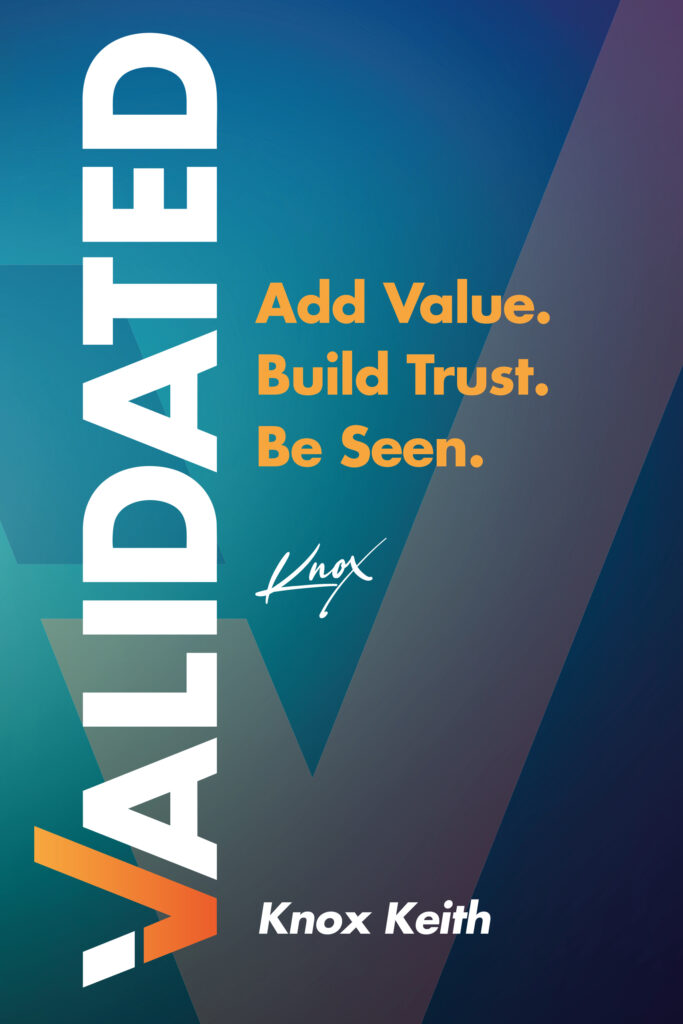
One of the ideas I explore in my book, Validated, is that visibility alone has very little value.
Visibility without credibility is just noise.
And yet — that’s exactly how most networking emails are written. A stranger sends me an email. They tell me they’re interested in my career. They attach a resume. They ask for advice or an internship.
And then they disappear behind the email.
No LinkedIn profile. No explanation of how they found me. No context. No connection. No reason for me to trust they are who they claim to be.
They’ve achieved visibility. But they haven’t built trust.
Trust Begins With Verification
Like most professionals, I receive spam every day. Emails. LinkedIn messages. Sales pitches. Robocalls. Marketing solicitations.
As a result, whenever someone I don’t know contacts me, my first instinct is simple: Verify.
Who are you? How did you find me? Why are you contacting me? Are we connected in some way? What is your story?
The easiest way to answer those questions is usually LinkedIn.
And yet — almost none of the students who contact me include a link to their profile.
Which means I’ve got to do the work myself.
And here’s a lesson you’ll learn quickly in business: the more work you create for someone, the less likely they are to help you.
Your Resume Isn’t Helping As Much As You Think
This may surprise you: I don’t really care about your resume. At least not initially.
That doesn’t mean your accomplishments aren’t important. It means your resume isn’t answering the questions I’m actually asking.
A resume tells me what you’ve done. I want to know who you are.
What are you interested in? What are you passionate about? How did you find me? Why me specifically? What made you send this email? What common ground do we share?
Because that’s where relationships start. Not with bullet points. But with connection.
Give Me Something Human
One student recently mentioned attending a well-known private school in Dallas.
Immediately, I knew the school. I had context. Now I was curious.
Another student mentioned that we volunteered for the same charity. Maybe we’re both members of the same fraternity. Maybe we’re both passionate about entrepreneurship or marketing.
Maybe we’re both obsessed with tacos.
I don’t care what the connection is. I just care that there is one.
Because relationships are built on shared experiences, shared interests, and shared values. Not resumes.
If we share genuine common ground and a professional interest, I can probably teach you almost anything I know. But first, I need to understand who you are.
The Question Nobody Answers
Many students write something like: “I found Knox Management Consulting and was impressed with what you do.”
Every time I read that sentence, I have the same question: How?
Was it LinkedIn? A professor? My book? A podcast? A conference? A mutual connection? A Google search?
The answer matters. Not because I’m interrogating you. Because it tells me whether this is a mass email sent to fifty people — or a thoughtful outreach directed specifically at me.
Motivation is everything.
Add Value. Build Trust. Be Seen.
Most students approach networking backwards. They think the goal is to be seen.
It’s not.
The goal is to build trust.
Visibility gets you noticed. Trust gets you a response.
Trust gets you a meeting. Trust gets you mentorship. Trust gets you opportunities.
Add Value. Build Trust. Be Seen.
Not the other way around.
A Note for HR Leaders and People Leaders
This isn’t just a student problem. Every day, HR leaders, CHROs, and Chief Growth Officers face a version of the same challenge — they’re trying to identify talent worth investing in, and they’re drowning in noise.
The professionals who rise to the top of the consideration set aren’t always the most qualified on paper. They’re the ones who have built a visible, credible, verifiable digital presence.
They show up with context and connection, not just credentials.
For CHROs, this has real hiring implications. When candidates haven’t done the work to make themselves easy to find and verifiable — no strong LinkedIn, no clear narrative, no evidence of thought leadership — it creates friction at every stage of the talent acquisition process.
For CGOs and growth leaders, the parallel is even more direct. The same trust-building principles that make a student’s outreach land are the principles that make your sales team’s outreach land. Visibility without credibility is just noise in sales, too.
The framework is the same at every level: Add Value. Build Trust. Be Seen.
Organizations that teach their people — from interns to executives — how to do that in the digital world will have a meaningful competitive advantage.
Before You Send That Email
Ask yourself:
- Did I explain how I found them?
- Did I include a link to my LinkedIn profile?
- Did I share something that helps establish common ground?
- Did I explain why I’m reaching out specifically to them?
- Did I make it easy for them to respond?
If not, you’re creating friction. And friction is the enemy of opportunity.
Final Thought
Most professionals genuinely want to help students. I know I do. But before I can invest my time, I need to understand who I’m investing it in.
So don’t just introduce yourself. Help me verify you. Help me trust you. Help me find the connection. Help reduce the friction in the process instead of creating it.
Because the students who learn to build trust before asking for help will always have an advantage over the ones who simply show up hoping to be seen.

And as always —

➡️ Get Validated: Add Value. Build Trust. Be Seen.: https://www.amazon.com/dp/B0GQ57HLXM
➡️ Join the Digital Validation™ program — https://knoxkeith.com/courses/
➡️ Give me a follow on LinkedIn: www.linkedin.com/in/knoxkeith
➡️ Subscribe to my newsletter: https://validatedbyknox.mykajabi.com/newsletter
_________________________________________________________________________________________________________________________________________________
Knox Keith is a strategic advisor, corporate and MBA level instructor, Emmy-winning storyteller, and author of Validated: Add Value. Build Trust. Be Seen. He has spent 30+ years helping professionals and organizations build credibility, communicate with clarity, and show up with confidence in the modern digital world.
_________________________________________________________________________________________________________________________________________________
Frequently Asked Questions
What should I include in a networking email to a professional?
Start with how you found them — be specific. Include a link to your LinkedIn profile so they can verify who you are quickly. Share one piece of genuine common ground, whether that’s a shared interest, a mutual connection, a book they wrote, or a podcast they appeared on. Keep it short. Make it easy to respond. The goal of the first email is not to get an internship — it’s to earn a reply.
Why don’t most networking emails get a response?
Because they create friction without building trust. Most networking emails are generic, resume-heavy, and give the recipient no reason to believe the outreach is sincere or specifically directed at them. Professionals receive dozens of these. The ones that stand out are the ones that feel human, specific, and easy to verify.
Is LinkedIn really that important for college students?
Yes. In today’s professional world, LinkedIn is often the first thing someone checks when they receive an outreach email. If there’s no profile — or a weak one — it creates doubt. A complete, thoughtfully written LinkedIn profile isn’t just a digital resume; it’s your credibility anchor. It tells the story your email can’t tell in three sentences.
How do I build trust with a professional I’ve never met?
Start by doing your homework. Read their content, their book, their posts. Reference something specific. Show them you’re not mass-emailing fifty people. Establish common ground — shared values, shared interests, a mutual connection. And make it easy for them to verify you’re who you say you are. Trust is built through specificity, not flattery.
What does “Visibility Without Credibility Is Just Noise” mean?
It means that being seen — sending emails, posting on LinkedIn, showing up at events — has very little value if the person seeing you has no reason to trust what they see. Credibility is what transforms visibility into opportunity. It’s the foundation of the Digital Validation™ framework I outline in my book, Validated.
How does this apply to hiring and talent acquisition?
HR leaders and CHROs face the same noise problem from the other side. They’re evaluating candidates who look identical on paper. The professionals who stand out aren’t always the most credentialed — they’re the ones who have built a clear, credible, verifiable presence. Candidates who understand how to Add Value, Build Trust, and Be Seen move faster through the hiring process and make stronger first impressions.
Is this relevant for sales and business development, not just job seekers?
Absolutely. Chief Growth Officers and sales leaders deal with the same fundamental challenge: cold outreach that creates noise instead of trust. The principles are identical. Specific, human, verifiable outreach outperforms generic volume every time. Organizations that train their teams on trust-building — not just visibility tactics — consistently see better results in pipeline development and relationship conversion.